 |
The European Public Health Association Newsletter – January 2021 |
1. Editorial
Welcome to this January edition of our newsletter, where you can find updates on EUPHA, our members, latest research as well as on WHO Europe, the European Commission and ECDC.
We are pleased to announce the 3rd edition of our European Public Health Week and hope that many of you are planning to actively participate in this week (17-21 May).
The European Public Health Conference 2021 has decided to be a virtual only event, as we are not sure whether travel will be widely possible this year. The abstract submission for this event is open as of Monday 1 February and we hope many of you will submit their work and research.
Wishing you pleasant reading,
Iveta Nagyova, EUPHA president, and Dineke Zeegers Paget, EUPHA executive director
|
2. EUPHA update
Marija Jevtic named European Climate Pact Ambassador
Marija Jevtic has been selected to be a European Climate Pact Ambassador as EUPHA-ENV section president. She advocates that ‘the Global Paris Climate Agreement, SDGs and the EU Green Deal should be guiding principles and policy pathways for all the experts, and society at large.’
https://europa.eu/climate-pact/ambassado…
World Congress on Public Health 2020: striving for solidarity in health
The WFPHA’s Walter Ricciardi, and EUPHA’s President Iveta Nagyova and Executive Director Dineke Zeegers Paget discuss the major achievements of the recent virtual World Congress on Public Health 2020.
Webinar on ‘Legal Epidemiology and the Path to Better Health Law and Policy’
On 21 January, the UK Faculty of Public Health and the EUPHA Public Health and Law and EUPHA Ethics in Public Health Sections hosted another rich and successful session of the international webinar series on Public Health Ethics, Law and Human Rights for the Future of Humanity (#PHethicsseries). |
3. European Public Health Week
Third edition happens on 17-21 May 2021!
The aim of #EUPHW is to raise awareness about important public health themes and connect professionals contributing to public health across Europe. Each of the first two editions
Get involved: Any individual or institution is welcome to be an Event Host, Disseminator or Participant. An event submission form will be available soon at eupha.org/EUPHW
The European Public Health Week is an initiative by the European Public Health Association (EUPHA) supported by the WHO Regional Office for Europe. Co-funded under an operating grant from the European Union’s Health Programme. |

4. European Public Health Conference
14TH EUROPEAN PUBLIC HEALTH CONFERENCE, 10 – 12 NOVEMBER 2021
PUBLIC HEALTH FUTURES IN A CHANGING WORLD
EPH Conference 2021 goes virtual
The conference will be organised from Wednesday 10 until Friday 12 November. The programme will be much similar to previous EPH Conferences with plenary sessions, workshops, oral and poster presentations and Join the Networks. Most sessions will be live with interaction and moderation. All parallel sessions are 60-minutes. More information about the programme is available on our website shortly. |
5. EUPHA members update2021 Congress of the French Society of Public Health
The French Society of Public Health will be organising its Congress, standing at the crossroads of research, intervention and public decision in October 2021. The central theme, ‘Act in controversial and uncertain times: what can public health learn?’, will explore, among other things, how the necessity to act fast meets the longer temporality to produce scientific knowledge. |
6. European Journal of Public Health
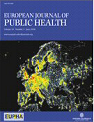
Advance articles – January 2021
Learning from past mistakes? The COVID-19 Vaccine and the Inverse Equity Hypothesis Disability pension among persons with chronic disease: Differential impact of a Danish policy reform The association between migration and smoke-free families: how do migrants from different world regions compare? Strategy for finding occupational health survey participants at risk of long-term sickness absence Shiga toxin-producing Escherichia coli diagnosed by Stx PCR: assessing the public health risk of non-O157 strains Socioeconomic inequality in telephone triage on triage response, hospitalization and 30-day mortality Public support for European cooperation in the procurement, stockpiling and distribution of medicines Socioeconomic position and risk of unplanned hospitalization among nursing home residents: a nationwide cohort study Dose-related and contextual aspects of suboptimal adherence to antiretroviral therapy among persons living with HIV in Western Europe Association between health literacy and colorectal cancer screening behaviors in adults in Northwestern Turkey Exposure to multiple childhood social risk factors and adult body mass index trajectories from ages 20 to 64 years Demographic and public health characteristics explain large part of variability in COVID-19 mortality across countries Predicting difference in mean survival time from cause-specific hazard ratios for women diagnosed with breast cancer
Lifetime costs and lifetime net public expenditures of smoking
Health-related quality of life among rural adults with type 2 diabetes mellitus: a cross-sectional study
Introduction of user fee for language interpretation: effects on use of interpreters in Danish health care
Immediate and long-term health impact of exposure to gas-mining induced earthquakes and related environmental stressors |
7. Call for proposals, job opportunities
Call for papers: Special section in the International Journal of Communication
The title of the call is “COVID-19, Digital Media, & Health,” and it covers broad perspectives on digital media use and health in the COVID-19 pandemic.
Call for manuscripts: Digitalization for precision healthcare
The goal of this special issue is to collect strategies, models and evidence concerning the use of data-driven approaches, digital tools and infrastructures which enable precision healthcare.
Address assistance, support and integration of third-country national victims of trafficking in human beings
TOPIC ID: AMIF-2020-AG-CALL-05
Daniel Carasso Fellowship – PostDoctoral Aid
The Fundación Daniel y Nina Carasso is active in two focus areas: Sustainable Food, for universal access to healthy food that is safe for people and ecosystems; and Art & Citizenship, to develop critical thinking and reinforce social bonds. The Foundation supports projects in France and Spain by providing financial resources and by accompanying a broad diversity of people and projects.
Fund for research on unintentional injuries, and urgent and emergency care, in low and middle income countries (LMICs)
The fourth call of the Research and Innovation for Global Health Transformation (RIGHT) programme will fund research on unintentional injuries, and urgent and emergency care, in low and middle income countries (LMICs).
Call for proposals Safer Road Users and Safer Vehicles – Round 18
Bloomberg Philanthropies Initiative for Global Road Safety Road Safety Grants Programme |
8. Interesting news
The Healthiest Goldfish: Why health, why here, and why now
Author: Sandro Galea
Shaping of post-COVID-19 EU: Only with organised civil society!
‘Christa Schweng, President, European Economic and Social Committee details the shaping of post-COVID-19 EU and argues that this is only possible with an organised civil society.’
Coordinating research on pandemic preparedness and rapid response
Dr Charu Kaushic, Chair of GloPID-R, and Dr Geneviève Boily-Larouche, CIHR Institute of Infection and Immunity, provide a perspective on pandemic preparedness and response, including lessons learned for global coordination among research funders.
Protecting health workers: An urgent need for action
The COVID-19 pandemic has led to higher infection and death rates for health care workers compared to the general population. Sadly, this is not a new phenomenon. Health care worker infections threaten our ability to respond to disease outbreaks, and make all of us less safe.
Let’s talk e-cigarettes Podcast
A podcast by the University of Oxford
The transcript is available here.
The sobering truth: incentivizing alcohol death and disability – An NCD policy report
Vital Strategies | Policy report | 14 January 2021
Infographic – How mRNA vaccines protect you against COVID-19
Council of the European Union | Infrographic | January 2021
A One Health approach to climate change and the COVID-19 pandemic
HEAL | Briefing | 20th January 2021
When the market becomes deadly – How pressures towards privatisation of health and long-term care put Europe on a poor footing for a pandemic
Corporate Europe Observatory | Report | 26 January 2021 |
9. Upcoming courses and conferences
|
10. Interesting publications
When informal work and poor work conditions backfire and fuel the COVID-19 pandemic: why we should listen to the lessons from Latin America
Lotta G, Kuhlmann E.
Publication on SHELS Study of Infection
the last analysis from Phase 4 of the Scottish Health and Ethnicity Linkage Study (SHELS) has just been published as an Open Access paper in the Journal of Public Health. It examines rates of hospitalisations and deaths related to all infections and 15 different infection categories. It also looks at ethnic differences for serological diagnoses of HIV, HBV and HBC. The study demonstrates very varied, and sometimes enormous, ethnic differences, pointing to a complex mix of causative factors. Given the recent focus on ethnic differences in morbidity and mortality due to COVID-19, we think the publication of our paper is particularly timely.
Communicating effects of ambient air pollution
With an ever increasing number of publications on ambient air pollution and its effects on human health it has become difficult to distinguish between causal and accepted effects of air pollutants and suggested effects. The US EPA’s integrated science assessments analyze the level of evidence for health effects of the “criteria pollutants” including particulate matter (PM), oxides of nitrogen (e.g. NO2), ozone, sulfur dioxide (SO2) and carbon monoxide (CO). The EPA assesses the relationship between pollutants and potential health effects using a five-point scale. The levels “causal” and “likely to be causal” are the two highest levels on this causality scale. The LUDOK-team at the Swiss Tropical and Public Health Institute has translated the causal and likely to be causal relationships into an interactive figure and table, which shows the affected organs and lists the specific health effects. The aim is to better communicate the known short-term and long-term effects of ambient air pollution.
Estimating the impact of achieving Turkey’s non-communicable disease policy targets: A macro-simulation modelling study
The Lancet Regional Health Europe | Research Paper | 5 January 2021
An action plan for pan-European defence against new SARS-CoV-2 variants
The Lancet | Correspondance | 21 January 2021
COVID-19–break the cycle of inequality
The Lancet Public Health | Editorial | 20 January 2021
How a European health union can strengthen global health
The Lancet Regional Health Europe | Commentary | 25 January 2021
Covid 19: Hope is being eclipsed by deep frustration
The BMJ | 21 January 2021
Undocumented migrants during the Covid-19 pandemic – socio-economic determinants – clinical features and pharmacological treatments
Does thinking make it so? Differential associations between adversity worries and experiences and mental health during the COVID-19 pandemic
Journal of Epidemiology & Community Health | Original research | 22 January 2021
Interventions to reduce the public health burden of gambling-related harms: a mapping review
The Lancet Public Health | Review | January 2021
Premature mortality due to air pollution in European cities: a health impact assessment
The Lancet Planetary Health | 19 January 2021
Conference equity in global health: a systematic review of factors impacting LMIC representation at global health conferences
The BMJ Global Health | Original Research | 20 January 2021
The Legal Determinants of Health: How Can We Achieve Universal Health Coverage and What Does it Mean?
International Journal of Health Policy and Management | January 2021 |
11. European Commission news
Air pollution and COVID-19
Study requested by the ENVI committee
Commission sets out key actions for a united front to beat COVID-19
Two days ahead of the meeting of European leaders on a coordinated response to the COVID-19 crisis, the Commission set out a number of actions needed to step up the fight against the pandemic. In a Communication adopted today, it calls on Member States to accelerate the roll-out of vaccination across the EU: by March 2021, at least 80% of people over the age of 80, and 80% of health and social care professionals in every Member State should be vaccinated. And by summer 2021, Member States should have vaccinated a minimum of 70% of the adult population.
Vaccine deliveries and the vaccine export transparency scheme
Press statement by Stella KYRIAKIDES, European Commissioner for Health and Food Safety on vaccine deliveries and on the vaccine export transparency scheme.
Commission launches debate on responding to the impact of an ageing population
The European Commission presented a green paper to launch a broad policy debate on the challenges and opportunities of Europe’s ageing society. It sets out the impact of this pronounced demographic trend across our economy and society and invites the public to express their views on how to respond to this in a public consultation, which will run for 12 weeks. |
12. European Centre for Disease Prevention and Control news
Eurosurveillance – Volume 26, Issue 1, 07 January 2021
Rapid communication
Eurosurveillance – Volume 26, Issue 3, 21 January 2021
Rapid communication
Eurosurveillance – Volume 26, Issue 2, 14 January 2021
Rapid communication |
13. WHO news
Decade of Healthy Ageing 2021 – 2030
The United Nations has proclaimed 2021–2030 the Decade of Healthy Ageing, with WHO leading international action to improve the lives of older people, their families and communities.
WHO/Europe’s year in review 2020
An interactive timeline looking back to an unprecendent year in Europe.
Statement – COVID-19: a challenging start to 2021, new COVID-19 variants and promising vaccine progress
Watch the statement by Dr Hans Henri P. Kluge, WHO Regional Director for Europe
Uzbekistan is making healthy diets a cornerstone of national policy with the help of WHO
Uzbekistan is taking important steps towards the prevention of noncommunicable diseases (NCDs) with technical guidance and support from WHO. Recently, the country adopted a series of important measures that can significantly improve food safety and the quality of nutrition, reducing many health risk factors for the population.
Universal health coverage high on the political agenda during the Regional Director’s visit to Georg
During a country visit to Georgia on 18–23 December 2020, Dr Hans Henri P. Kluge, WHO Regional Director for Europe, discussed priority areas for health with high-level representatives. The visit was also an opportunity to speak with health care workers on the frontline of the COVID-19 pandemic. |
|
This newsletter received co-funding under an operating grant from the European Union’s Health Programme (2014-2020). The content of this newsletter represents the views of the author(s) only and is his/her sole responsibility; it cannot be considered to reflect the views of the European Commission and/or the Consumers, Health, Agriculture and Food Executive Agency or any other body of the European Union. The European Commission and the Agency do not accept any responsibility for use that may be made of the information it contains.
|
|
Unsubscribe
If you would like unsubscribe from the EUPHA newsletter then please click here.
|