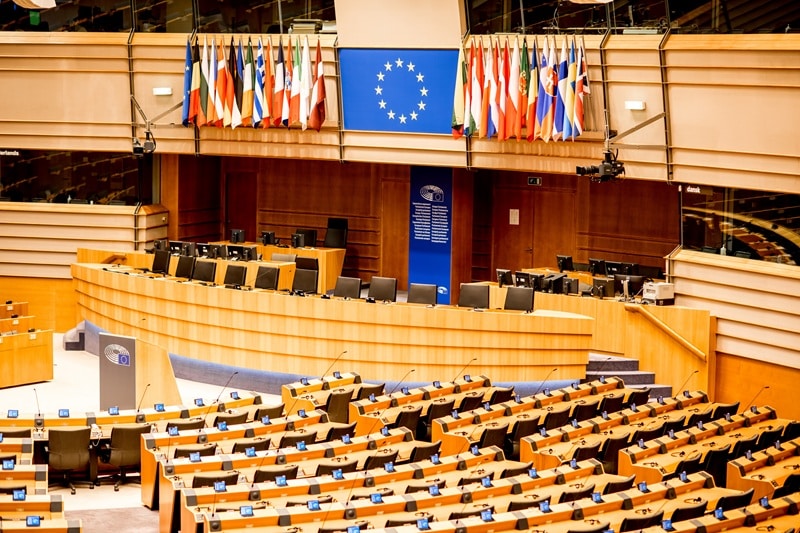
EUPHA welcomes President Ursula von der Leyen’s State of the Union address, delivered to the European Parliament on 16th September 2026. Article 168 of the Treaty on the Functioning of the European Union creates a requirement to ensure that a high level of human health protection shall be ensured in the definition and implementation of all Union policies and activities, while the European Union has committed to the achievement of a European Health Union. Consequently, EUPHA was pleased to see that several sections of the speech take us further to achieving these goals. However, the task ahead of us is vast, so we also highlight several issues that, we hope, will be developed further beyond the measures outlined in the speech.
First, we welcome the proposed European Heatwave Plan. Our recent statement on the extreme weather events and wildfires that caused death and destruction in many parts of Europe this summer sets out why we see this as a public health emergency. We have already seen the benefit of European collaboration to combat wildfires, for example in the shared provision of firefighting resources but more can be done. The arrival of what is predicted to be an exceptionally severe El Nino effect makes it urgent to take forward the commitments to strengthen coordination of early warning, health preparedness, urban cooling and support for vulnerable people as soon as possible. The planned climate resilience framework, including attention to especially vulnerable territories in the European Union, is also welcome. We join President von der Leyen in extending our thanks to all those who fought the wildfires and our condolences to the families who lost their lives.
Second, we welcome the continued commitment to clean energy, electrification and reduced dependence on fossil fuels. These policies can produce immediate health benefits through cleaner air, warmer homes and greater protection from volatile energy prices. They can also reduce the future burden of climate-related disease. The transition must be fair, but its public health potential is considerable, particularly if investment prioritises low-income households and communities facing the greatest environmental risks.
Third, we welcome the emphasis on placing humans at the centre of developments in the use of artificial intelligence (AI) in healthcare. The principle that AI should empower professionals rather than replace them is essential. Responsible use of health data and carefully evaluated decision-support systems have the potential to improve health care in many ways that we are only now realising. However, this requires independent assessment, professional oversight, transparency and monitoring after implementation. Innovation should serve patients and health professionals, rather than becoming an end in itself.
Fourth, we welcome action to make children’s digital environments safer. The proposed EU KIDS ACT and wider measures against addictive design recognise that responsibility cannot rest only with children and parents. Requiring platforms to demonstrate safety is consistent with a preventive public health approach to commercial determinants of health. Age-appropriate design, privacy protection and independent evaluation will be crucial to achieving benefits without excluding children from valuable forms of communication and support. However, we encourage the Commission to take account of current debates on how to maximise the public health benefits of this policy.
We also welcome the recognition of care, housing and decent work as rights. The proposed European Care Deal, Housing Act and Quality Jobs Act address fundamental determinants of health and health inequalities. We also note the clear link between housing and climate. Secure housing, adequate care and good working conditions influence physical and mental health throughout life. Together with action on water, food and regional resilience, these proposals point towards a broader European Health Union concerned not only with emergencies and medical treatment, but also with the conditions in which people live. The next step is to connect these initiatives through explicit health objectives, adequate financing and accountability for equitable outcomes.
We now need to convert these commitments into a convincing programme of action to deliver them and ensure that health is an explicit objective across the agenda. EUPHA encourages the Commission to set clear, measurable goals to safeguard and promote health, while making the narrowing of health inequalities the test of success. No one should be left behind by Europe’s transition so it will be essential to prioritise the people and communities facing the greatest health risks and the poorest health outcomes while addressing the conditions that drive those inequalities. Europe’s resilience and competitiveness will ultimately depend not only on the strength of its economy and institutions, but on its ability to give everyone an opportunity to live a healthy life.