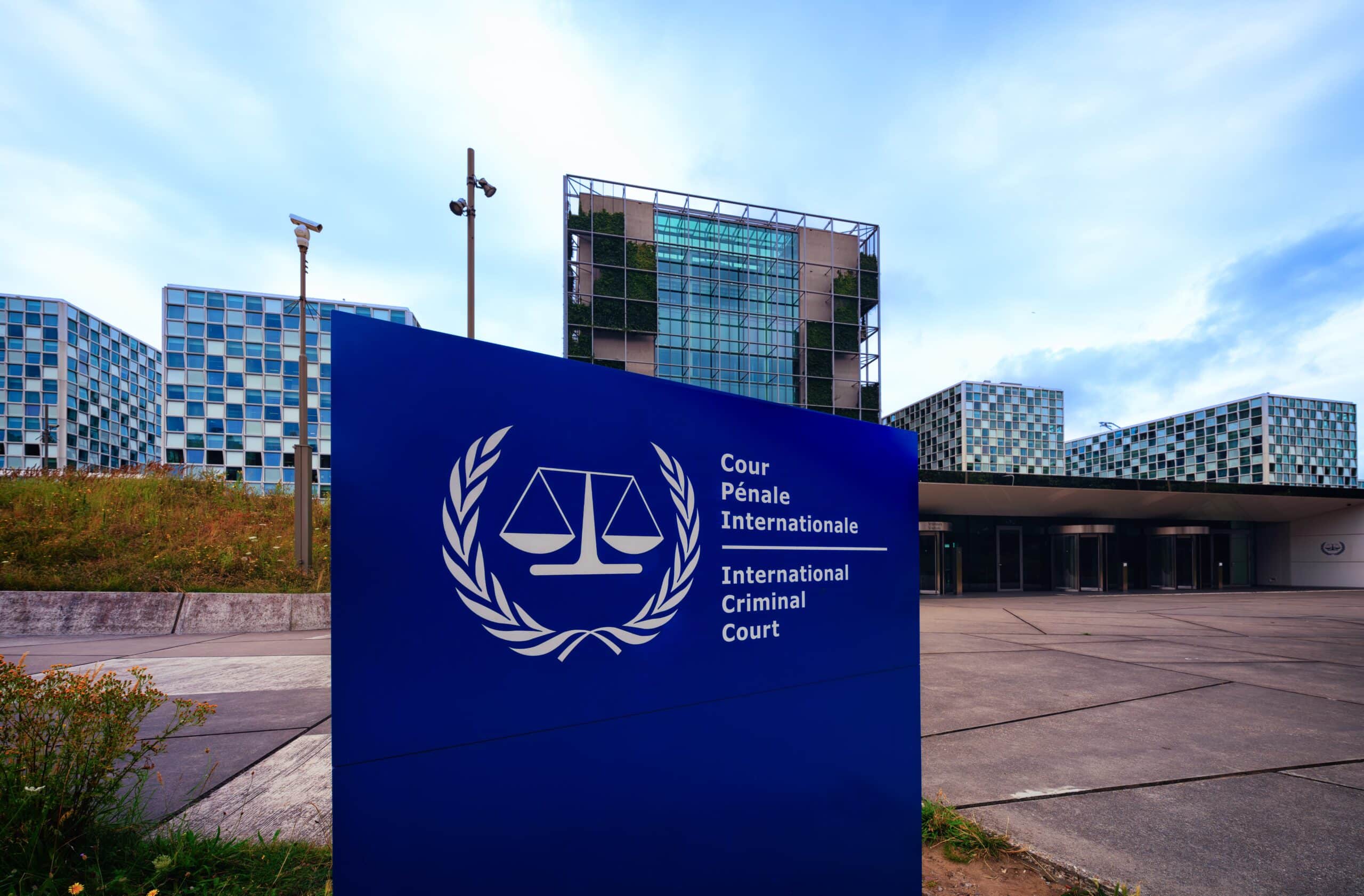
EUPHA warmly congratulates Navanethem “Navi” Pillay on receiving the 2026 Nobel Peace Prize, recognising her lifelong commitment to peace and international law. She is an exceptional jurist who has helped turn the promise of accountability into legal practice. From challenging apartheid in South Africa to serving on the International Criminal Tribunal for Rwanda and the International Criminal Court (ICC) in The Hague, and as UN High Commissioner for Human Rights, Pillay has shown how law can give victims a voice and constrain the exercise of power.
The timing could hardly be more significant. Within hours of the Nobel announcement, the United States imposed sanctions on the ICC as an institution, following earlier measures against individual judges and prosecutors. This escalation threatens the Court’s ability to pay staff, obtain banking and insurance services, maintain secure digital systems and work with civil society. It also sends a chilling message to anyone who assists an independent court: participation in international justice may carry a personal or commercial price.
EUPHA condemns this decision. Governments may criticise judgments, challenge jurisdiction and contest legal reasoning through established procedures. They should not use economic power to disable a court or intimidate those who serve it. Sanctioning an independent judicial institution because its work is politically inconvenient attacks the principle that the law applies consistently, not at the discretion of the strongest.
For the public health community, this is not an abstract dispute among lawyers. War, forced displacement, attacks on health workers and facilities, starvation, and the destruction of water and sanitation systems produce death and illness on a vast scale. Impunity increases the likelihood that such harms will be repeated. International humanitarian, human rights, and criminal law set limits on conduct, protect civilian life, and create routes to accountability when those limits are breached.
The rule of law also underpins the international cooperation on which health security depends. Epidemics, environmental hazards and humanitarian crises cross borders. Effective responses require institutions that can collect evidence, coordinate action and command trust. A world in which powerful states can punish international bodies for performing their mandates is less safe, less predictable and less healthy.
Europe has a particular responsibility to act. The modern system of international law arose in large measure from the continent’s experience of two world wars, the Holocaust and other atrocities. The post-war generation helped establish the United Nations, the Geneva Conventions, the European Convention on Human Rights and, eventually, a permanent international criminal court. European governments led negotiations on the Rome Statute, and the ICC was based in The Hague, a city long associated with international justice.
These institutions are imperfect, and international law has never been applied consistently. Powerful states have too often escaped accountability. But inconsistency is an argument for strengthening universal application, not abandoning it. The achievement of the post-war order was to affirm that sovereignty does not confer unlimited licence and that individuals responsible for genocide, crimes against humanity and war crimes may be called to account.
The European Union has reaffirmed its support for the ICC and called for the US to reverse its measures. That diplomatic stance is necessary, but declarations alone will not keep the Court functioning. The EU and its Member States should now adopt a coordinated package of practical protection.
- First, activate the EU Blocking Statute, or adopt equivalent legislation, to prohibit EU-based companies from complying with extraterritorial US sanctions against the ICC and its personnel, while providing effective remedies for resulting losses.
- Second, guarantee essential financial services, including banking, payments, insurance and pensions. Public institutions should be ready to provide protected channels if private firms withdraw through fear of US penalties.
- Third, secure the Court’s operational independence by ensuring access to European cloud hosting, cybersecurity, communications, legal advice, auditing and other critical services. Dependence on a small number of US-linked suppliers must not become a mechanism for disabling international justice.
- Fourth, increase financial and practical support for the Court, its staff and civil society partners, including assistance with legal defence, security and continuity of investigations.
- Finally, build a broad diplomatic coalition among States Parties to the Rome Statute and other supporters of international law. The EU should engage Washington to pursue reversal and workable safeguards, but make clear that judicial independence is non-negotiable. If coercion persists, it should consider using its wider anti-coercion instruments.
This is a defining test for Europe. The question is not whether every government agrees with every ICC decision. The question is whether international courts can apply their mandates without retaliation. In honouring Navi Pillay, the Nobel Committee has recognised the courage required to uphold law when power resists constraint. Europe should show comparable resolve. Defending the ICC means defending the principles on which peace, human rights and public health ultimately depend.