 |
The European Public Health Association Newsletter – September 2019 |
1. Editorial
Welcome to our September newsletter. The summer holiday season is over, as you can see from the increased number of activities and events that took place the past month. Read all about them in this newsletter, including the nomination of two leaders in health: Stella Kyriakides as Commissioner designate for health and Hans Kluge as Director of WHO Regional Office for Europe.
Wishing you pleasant reading,
Natasha Azzopardi Muscat, EUPHA President, and Dineke Zeegers Paget, EUPHA Executive Director
|
2. EUPHA update
Renewed EUPHA Policy liaison officer vacancy
EUPHA is looking for a Brussels-based policy liaison officer
The European Public Health Association – EUPHA – is recruiting a Policy liaison officer (m/f) (36 hours per week). The policy liaison officer will work at the EUPHA satellite office in Brussels, Belgium, to support the main office.
b) liaises between Brussels and EUPHA office
c) identifies interesting opportunities for EUPHA related to European health policy
d) supports the organisation of EUPHA events in Brussels
e) contributes to the operation of the EUPHA office and all the activities of EUPHA and the EPH conference
Job requirements:
Competencies:
We offer:
Four proposals to increase protection of the people of Europe against vaccine-preventable disease
Ahead of the Meeting of the Coalition for Vaccination, that took place on 11 September and the Global Vaccination Summit, that took place 12 September 2019 in Brussels, Belgium, EUPHA published a short statement on vaccination. The Coalition meeting was attended by Anna Odone, vice-president of the EUPHA Infectious diseases control section. The Summit was hosted by the European Commission and the World Health Organization. Natasha Azzopardi Muscat, EUPHA President, attended this high-level event.
https://eupha.org/repository/advocacy/Va…
National Health Workforce Accounts at the WHO Regional Committee for Europe
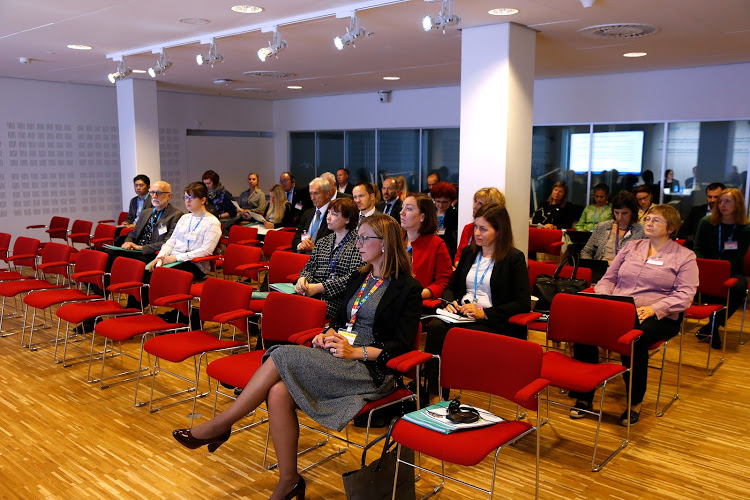
During the 69th meeting of the Regional Committee of the World Health Organisation, EUPHA President Dr Natasha Azzopardi-Muscat participated in a side event.
Using the National Health Workforce Accounts to tackle health workforce challenges. Reference was made to the Global Strategy on Health Resources for Health 2030. By 2020, the following milestones are meant to be achieved:
2020 will also celebrate the year of the Nurse and the Midwife and will launch the first ever State of Nursing World Health Report.
Dr Azzopardi Muscat thanked WHO for the sterling work being done in the area of health workforce and commended the pragmatic approach being taken towards the deployment of the Health Workforce Accounts. She emphasised that from EUPHA’s perspective, the role and contribution of the migrant health workforce needs to feature highly on the HRH policy agenda since this can be an instrument to shape narratives around migration and society. She commended the broad encompassing definition of health workforce being used and asked to ensure that the interdisciplinary nature of contribution to public health should be recognised. She called for further analysis around digital technologies, robotics and AI and their potential and impact on the health workforce. Finally she highlighted the work being carried out by the EUPHA section on health workforce and triturated EUPHA’s disposition to support the work of WHO in this important policy area. There can be no universal health coverage without the appropriate health workforce.
EUPHA coordinates joint statements at WHO Regional Committee for Europe (16-19 Sept, Copenhagen)
The 69th session of the WHO Regional Committee for Europe took place 16 – 19 September 2019 in Copenhagen, Denmark. This year, again, EUPHA coordinated the writing of joint statements. The EUPHA-led statement on health leadership was co-signed by 17 other non-state actors.
Following the election of the new Regional Director, EUPHA submitted a statement congratulating Hans Kluge on behalf of the non-state actors (28 co-signatories).
EUPHA also submitted an oral statement on health equity, submitted via video and presented by our Executive Director, Dineke Zeegers Paget.
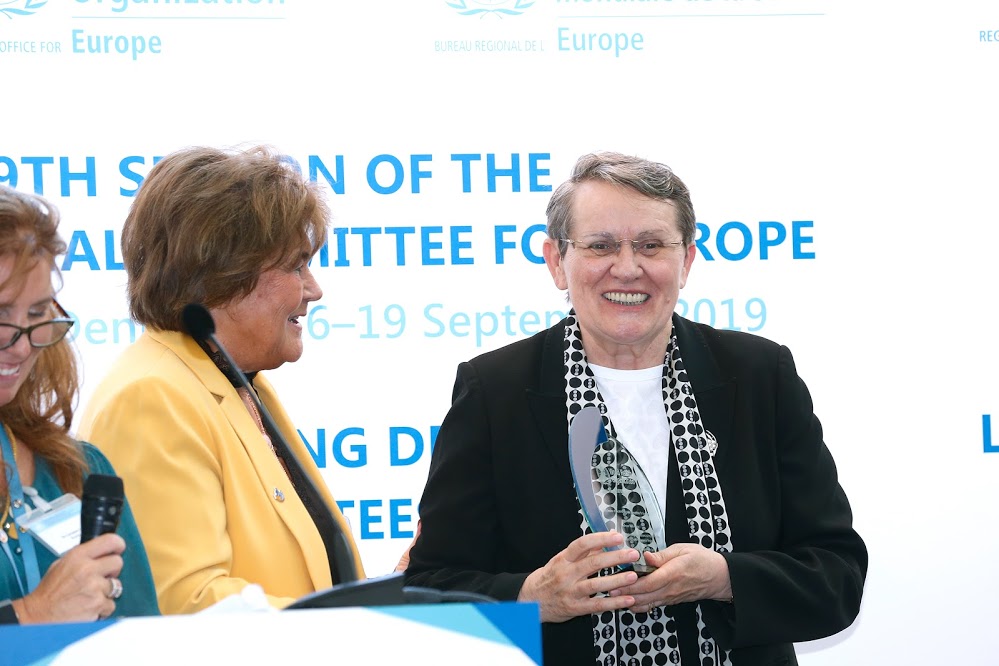
WHO Regional Director’s awards for health to two EUPHA board members
During a lunchtime session at the Regional Committee for Europe (16-19 September in Copenhagen), Dr Jakab celebrated the exceptional contribution of several individuals to improving public health in the Region, including two EUPHA board members.
We congratulate Róza Ádány and Martin McKee!
The European Public Health News of August 2019, presented by our Executive Director
Watch the short introduction to the European Public Health news on our EUPHA YouTube channel. The full columns can be read in the most recent issue of the European Journal of Public Health, available here. |

3. European Public Health Conference
12th European Public Health Conference
Join the network meetings
EUPHA Sections are theme-specific networks that organise workshops and projects together. All EUPHA Sections are inviting you to Join the Network and attend their annual meeting during the lunch break. These meetings are open to all delegates. Get your lunch before or after the meeting and feel free to join the network.
The JTN meetings are listed in the online programme.
EUPHA at EPH 2019
On the last day of the conference, Saturday 23 November 2019, there are several interesting workshops that are (co-)organised by EUPHA. To list a few:
The full programme is available here.
|
4. EUPHA members update
MAPHM press statement on vaccination
The Malta Association of Public Health Medicine issued a statement on the importance of developing a national vaccination strategy for Malta.
Newsletter of our Dutch member
The latest news of the Dutch Federation for Health is available online (in Dutch).
Interview with 300th French registered participant for Marseille 2019
The special news flash of the French society for public health (Société Française de Santé Publique) includes an interview with 300th French participant that registered for European Public Health Conference. This year we are expecting a record number of French participants at the European Public Health Conference, taking place 20-23 November 2019 in Marseille, France.
The news flash also highlights the ‘Maison France’ (the French house) that will be present at the exhibition hall with 9 French institutions presented.
https://www.sfsp.fr/suivre-l-actualite/f…
|
5. European Journal of Public Health
Volume 29, Issue 5, October 2019
EDITORIALS
Ebola: global commitment for local engagement needed
Austerity and health in Europe: disentangling the causal links
FOOD AND NUTRITION
Research partnerships between Coca-Cola and health organizations in Spain
Household food unavailability due to financial constraints affects the nutrient intake of children
Evaluation of new approaches to the access of official monitoring results for live bivalves molluscs
Household dietary salt consumption and mortality from cardiovascular diseases: an ecological panel analysis in Japan
WORK AND HEALTH
Framingham score and work-related variables for predicting cardiovascular disease in the working population
Physical workload and bodily fatigue after work: cross-sectional study among 5000 workers
Sociodemographic factors associated with secondhand smoke exposure and smoking rules in homes with children
Inequity in postpartum healthcare provision at home and its association with subsequent healthcare expenditure
Cumulative childhood adversity, adolescent psychiatric disorder and violent offending in young adulthood
A practical composite risk score for the development of Haemolytic Uraemic Syndrome from Shiga toxin-producing Escherichia coli
Usefulness of a job-exposure matrix ‘MADE’ as a decision tool for compensation of work-related musculoskeletal disorders
ENVIRONMENT
Impact of modelled PM2.5, NO2 and O3 annual air concentrations on some causes of mortality in Tuscany municipalities
Asbestosis and silicosis hospitalizations in Italy (2001–2015): results from the National Hospital Discharge Registry
Trajectories of mobility limitations over 24 years and their characterization by shift work and leisure-time physical activity in midlife
MIGRATION
Effects of a randomized, culturally adapted, lifestyle intervention on mental health among Middle-Eastern immigrants
Disparities in treatment of diabetes and hypertension among groups of foreign origin and the general Finnish population
Adjuvanted influenza vaccine for the Italian elderly in the 2018/19 season: an updated health technology assessment
The prevalence of metabolic syndrome among Ghanaian migrants and their homeland counterparts: the Research on Obesity and type 2 Diabetes among African Migrants (RODAM) study
Women’s excess unhealthy life years: disentangling the unhealthy life years gap
CHILD AND ADOLESCENT HEALTH
Does health literacy explain the link between structural stratifiers and adolescent health?
Increase of internalized mental health symptoms among adolescents during the last three decades
Associations between adolescent social phobia, sickness absence and unemployment: a prospective study of twins in Sweden
Association between physical, psychological and social frailty and health-related quality of life among older people
Health inequalities: a Research Positioning Exercise at the National Institute of Health, Italy
SOCIOECONOMIC DETERMINANTS
The association between self-harm and area-level characteristics in Northern Ireland: an ecological study
Trends in disease mortality before and during the Great Recession in individuals employed in Spain in 2001
Trajectories of students’ well-being in secondary education in Germany and differences by social background
Impact of the 2017 measles outbreak on the emergency care system of a large tertiary-care teaching hospital in Italy: a retrospective analysis
Changes in socioeconomic mortality inequalities at adult and old ages in Lithuania, 2001–05 to 2011–15
MISCELLANEOUS
A review of lesbian, gay, bisexual, trans and intersex (LGBTI) health and healthcare inequalities
Risk of hospital readmission and associated factors after a positive sample for a multidrug-resistant microorganism
Mid-life social participation and physical performance at age 60–64: evidence from the 1946 British Birth Cohort Study
Status quo bias and health behavior: findings from a cross-sectional study
EUROPEAN PUBLIC HEALTH NEWS
European Public Health News
Watch the short introduction video by Dineke Zeegers Paget to this European Public Health news here, on the EUPHA YouTube channel.
|
6. Call for proposals, job opportunities
Associate professor in health promotion with competences in policy research
The Unit of Health Promotion Research, Department of Public Health, University of Southern Denmark, Campus Esbjerg invites applications for a position as associate professor within the area of health promotion with competences in policy research. The position is available from February 1, 2020.
Application deadline: October 20, 2019. See the full job advertisement here:
Trainee position in cancer epidemiology and cancer registration
An opportunity for a traineeship in the Cancer Information group at the European Commission’s Joint Research Centre in Ispra, Italy. Deadline for application is 21/10/2019.
Positions at Max Planck Institute for Demographic Research
The Max Planck Institute for Demographic Research in Rostock, Germany, seeks qualified people for a number of positions in the Lab of Digital and Computational Demography, including Associate Professor, Post-Docs, Research Scientists, PhD positions, and summer research visits.
https://www.demogr.mpg.de/en/education_c...
Bennett Prospect Prize
£10,000 | Open till 31 December 2019 – For early career researchers and policy professionals.
The Bennett Prospect Prize for Public Policy is awarded by the Bennett Institute for Public Policy at the University of Cambridge and is held in partnership with Prospect magazine. The goal is to encourage early career researchers and policy professionals to explore creative and generative solutions to a pressing public policy question of our age.
For more details visit: www.bennettinstitute.cam.ac.uk/prize
Head of the Department of Health Information at the Prasanna School of Public Health (PSPH), Manipal, India
Please click here for details.
|
7. Interesting news
A new leader for health in Europe
There is a new leader for health in Europe: Stella Kyriakides is Commissioner Designate for Health. This was made known by Ursula von der Leyen, President-elect of the European Commission, as she presented her team for Europe.
We congratualte Ms. Kyriakides on her appointment as Commissioner Designate for Health in an open letter and highlight key threats to public health which we believe merit a strong focus in the coming years.
https://eupha.org/repository/advocacy/Le...
Hans Kluge as the new Regional Director elect of WHO Europe
EUPHA is very pleased with the election of Hans Kluge as the incoming regional director of the WHO office for Europe. Over the past years, we have been working extensively with Hans and his department in the Coalition of Partners as well as with other departments in WHO Europe. We look forward to intensifying this collaboration even more. We congratulate Hans on his election and thank Zsuzsana Jakab for her 10 years of commitment to health in Europe.
Cheap fags and booze: why now, more than ever, we need a whole government approach to health
On Tuesday, an announcement by the Chancellor and accompanying HM Treasury tweet promoted cheap cigarettes and alcohol as something we can all look forward to following a no-deal Brexit. A government department promoting the use of tobacco and alcohol at a time when life expectancy is stalling—and for some groups falling—is at best, wilful ignorance, and at worst, shameless political marketing.
Trans health and the risks of inappropriate curiosity
Care providers need to be aware of the damage of inappropriate curiosity when working with people who are transgender, say Adam Shepherd, Benjamin Hanckel, and Andy Guise
Michel Kazatchkine: The time has come to implement harm reduction policies in Eastern Europe and central Asia
The evidence is clear, Eastern European and Central Asian countries should adopt opioid maintenance therapy and needle exchanges to curb HIV and Hep C outbreaks, says Michel Kazatchkine.
Michigan becomes first state to ban flavoured e-cigarettes
Michigan has become the first US state to ban flavoured e-cigarettes as part of efforts to curb youth vaping.
https://www.bbc.com/news/world-us-canada...
|
8. Upcoming courses and conferences
|
9. Interesting publications
Launch of ‘Public Mental Health: Evidence, practice and commissioning’
Malaria eradication within a generation: ambitious, achievable, and necessary
https://www.thelancet.com/journals/lance…
Healthcare is not universal if undocumented migrants are excluded
https://www.bmj.com/content/366/bmj.l416…
How Neoliberalism Is Shaping the Supply of Unhealthy Commodities and What This Means for NCD Prevention
http://www.ijhpm.com/article_3646.html
Investing in leadership for universal health coverage
https://www.thelancet.com/journals/langl…
Long-term outcomes of childhood sexual abuse: an umbrella review
https://www.thelancet.com/journals/lanps…
Achieving health equity: democracy matters
https://www.thelancet.com/journals/lance…
European Health Misconception Study 2019
https://www.gapminder.org/european-healt…
Farmers’ health and wellbeing needs to be at the centre of Brexit response – new report
https://phw.nhs.wales/news1/news/farmers…
Immediate impact of minimum unit pricing on alcohol purchases in Scotland: controlled interrupted time series analysis for 2015-18
https://www.bmj.com/content/366/bmj.l527…
EuroHealth issue dedicated to Digital Health Systems
http://www.euro.who.int/en/about-us/part…
Policy brief: Sustainable health financing with an ageing population
http://www.euro.who.int/__data/assets/pd…
Health, digitalisation, inequality, and literacy: how they are linked and why it matters
https://eurohealthnet.eu/publication/dig…
Cancer patient or cancer survivor? Understanding illness identity
https://blog.oup.com/2019/09/cancer-pati…
Looking back on 10 years of global road safety
https://blog.oup.com/2019/09/looking-bac…
Public Health Policies: State of play, current & future challenges
http://www.europarl.europa.eu/RegData/et…
|
10. European Commission news
Vaccination: European Commission and World Health Organization join forces to promote the benefits of vaccines
The European Commission and the World Health Organization (WHO) co-hosted the world’s first Global Vaccination Summit in Brussels. The aim is to accelerate global action to stop the spread of vaccine-preventable diseases, and advocate against the spread of vaccine misinformation worldwide. The summit took place 12 September in Brussels.
https://ec.europa.eu/health/vaccination/…
Candidates for the new European Commission
Before the commissioners-designate can take office, Parliament exercises its power of democratic scrutiny by holding public hearings to assess their suitability for the job.
The designated members of the von der Leyen Commission will be heard by the EP committees dealing with their respective portfolios on 30.09-03.10.2019, and 07-08.10.2019. ENVI will be the lead committee with respect to the hearing of Frans Timmermans, Executive Vice-President designate for the European Green Deal, who will be heard on Tuesday 8 October between 18.30 and 21.30.
ENVI will also be the lead committee with respect to the hearing of Stella Kyriakides, Commissioner-designate for Health, on Tuesday 1 October between 18:30 and 21:30. ENVI will also be jointly responsible for the hearing of Virginijus Sinkevičius, Commissioner-designate for the Environment and Oceans together with the Fisheries Committee. |
11. European Centre for Disease Prevention and Control news
Achievements, challenges and major outputs 2018: Highlights from the Annual Report of the Director
This brochure briefly summarises the Centre’s accomplishments for the previous year. It covers all ECDC Disease Programmes, public health communication, training activities and outbreak preparedness.
https://ecdc.europa.eu/en/publications-d...
Eurosurveillance – Volume 24, Issue 39, 26 September 2019
Rapid communication
Miscellaneous
Eurosurveillance – Volume 24, Issue 38, 19 September 2019
Rapid communication
Outbreaks
Eurosurveillance – Volume 24, Issue 37, 12 September 2019
Rapid communication
Research
Surveillance
Eurosurveillance – Volume 24, Issue 36, 05 September 2019
Rapid communication
Research
|
12. WHO news
In Europe, people continue to consume more alcohol than in any other place in the world
A recent WHO report shows that rates of harmful alcohol consumption in Europe have not dropped as expected, even though all countries have signed the European Action Plan to Reduce the Harmful Use of Alcohol 2012–2020.
How integrating public and primary health care has improved health for all in Slovenia
People-centred, integrated primary health care has reduced health inequalities in Slovenia and improved the overall health of people. Its successful integration of public health services into primary health care is particularly impressive because few countries have managed to truly integrate such a variety of health promotion and diseases prevention services into primary health care to prevent and control noncommunicable diseases.
Suicide: one person dies every 40 seconds
The number of countries with national suicide prevention strategies has increased in the five years since the publication of WHO’s first global report on suicide, said the World Health Organization in the lead-up to World Suicide Prevention Day on 10 September. But the total number of countries with strategies, at just 38, is still far too few and governments need to commit to establishing them.
Stronger focus on nutrition within health services could save 3.7 million lives by 2025
Health services must integrate a stronger focus on ensuring optimum nutrition at each stage of a person’s life, according to a new report released by the World Health Organization (WHO). It is estimated that the right investment in nutrition could save 3.7 million lives by 2025.
Countries must invest at least 1% more of GDP on primary health care to eliminate glaring coverage gaps
Countries must increase spending on primary healthcare by at least 1% of their gross domestic product (GDP) if the world is to close glaring coverage gaps and meet health targets agreed in 2015, says a new report from the World Health Organization and partners on the eve of a UN General Assembly high-level meeting on Universal Health Coverage.
World Patient Safety Day:WHO calls for urgent action to reduce patient harm in healthcare
Millions of patients are harmed each year due to unsafe health care worldwide resulting in 2.6 million deaths annually in low-and middle-income countries alone. Most of these deaths are avoidable. The personal, social and economic impact of patient harm leads to losses of trillions of US dollars worldwide. The World Health Organization is focusing global attention on the issue of patient safety and launching a campaign in solidarity with patients on the very first World Patient Safety Day on 17 September.
United Nations High-Level Meeting on Universal Health Coverage
On 23 September 2019, a high-level meeting on universal health coverage (UHC) will be held at the United Nations General Assembly. The meeting, Universal Health Coverage: Moving Together to Build a Healthier World, will bring together heads of state, political and health leaders, policy-makers and UHC champions to advocate for health for all.
Progress on health equity is stalling across Europe; new WHO report reveals gaps can be reduced within the lifetime of a single government
WHO’s first-ever Health Equity Status Report reveals that health inequities in many of the 53 countries in the WHO European Region remain either the same or have worsened despite governments’ attempts to address them. The Report newly identifies 5 key risk factors that are holding many children, young people, women and men back from achieving good health and leading safe and decent lives.
RC69 opens on 16 September with review of progress in public health
On 16–19 September 2019, health ministers and high-level representatives of the 53 Member States of the WHO European Region, along with partner organizations and civil society, gathered for the 69th session of the WHO Regional Committee for Europe (RC69).
Croatia increases health literacy to reduce salt intake
As part of the comprehensive national health promotion project Healthy Living, Croatia has implemented measures to help people choose healthy food options and to encourage food producers to reduce the amount of salt added to foods.
Public Health Panorama, Volume 5, Issue 2-3, September 2019
This issue of Public Health Panorama is introduced by Zsuzsanna Jakab, Regional Director, A road to equity: health literacy from a public health perspective. Furthermore interviews with:
And several short communications, reports, and research papers.
10 actions: Everyone should be able to benefit from the power of vaccination
Lessons from the Global Summit on Vaccination and actions needed towards vaccination for all and elimination of vaccine preventable diseases – presented by the WHO and European Commission. |
|
This newsletter received co-funding under an operating grant from the European Union’s Health Programme (2014-2020). The content of this newsletter represents the views of the author(s) only and is his/her sole responsibility; it cannot be considered to reflect the views of the European Commission and/or the Consumers, Health, Agriculture and Food Executive Agency or any other body of the European Union. The European Commission and the Agency do not accept any responsibility for use that may be made of the information it contains.
|
|
Unsubscribe
If you would like unsubscribe from the EUPHA newsletter then please click here.
|