 |
The European Public Health Association Newsletter – November 2021 |
1. Editorial
Welcome to the November update. This month, the European Public Health Conference was organised as a virtual event. We had close to 2’000 participants and a packed programme with topics ranging from behavioural insights to the consequences of COVID-19. If you missed this year’s conference, make sure you submit your abstract for next year’s conference in Berlin.
We wish you pleasant reading,
Iveta Nagyova, EUPHA president, and Dineke Zeegers Paget, EUPHA executive director
|
2. EUPHA update
European Public Health Week 2022
Please mark these dates in your calendar already: the fourth edition of the European Public Health Week will take place from 16 to 20 May 2022. The overarching theme is ‘Health througout the life course’. For regular updates: European Public Health Week – Home (eupha.org) Daily themes have already been selected:
EUPHA delegation meets with the EU Commissioner for Health, Stella Kyriakides
On the 9th of November, EUPHA’s president, Iveta Nagyova, EUPHA’s deputy director, Maaike Droogers and EUPHA’s policy officer, Marie Guichardon, met with Stella Kyriakides to discuss future priorities and the importance of evidence-based decision making. EUPHA presented its main research tools: the EPH Conference, the European Journal of Public Health and the EUPHA sections.
EUPHA and EPH Conference publish the 2021 conference statement
On the 9th of November, the 2021 Conference statement (2021 EPH Conference statement-final_Signed.pdf (eupha.org)) was published with an invitation to our membesr and partners to co-sign this statement. The statement calls for:
EUPHA Section President elections 2021
There were two changes in Section presidency. We would like to thank Michael Edelstein (EUPHA-IDC) and Diana Sonntag (EUPHA-ECO) for their commitment to public health and EUPHA. We offer a warm welcome to the new Section Presidents:
Infectious diseases control EUPHA Statement on sexual and reproductive health rights
On the 17th of November, EUPHA published its statement on sexual and reproductive health and rights. This statement was written in collaboration with the EUPHA Working group on gender equality and Women Empowerment. |
3. European Public Health Conference
14TH EUROPEAN PUBLIC HEALTH CONFERENCE, 10 – 12 NOVEMBER 2021 – VIRTUAL EDITION
Participant’s evaluation
Take a few moments to evaluate the 14th EPH Conference. Your feedback is important to us and helps us improve the conference and better meet your needs. Help us to bring you another great event next year. All you need to do is to login to your EPH Conference account and give us a few minutes of your time.
All sessions, except the Lunch Symposiums, were recorded for delayed, on-demand viewing. Recordings are available for registered delegates until 12 December on the Virtual Platform.
The 14th EPH Conference has been accredited by the European Accreditation Council for Continuing Medical Education (EACCME) with 15 European CME credits. Each medical specialist should claim only those hours of credit that he/she actually spent in the educational activity. The Certificate is downloadable from your personal EPH Conference account. The Certificates will be available until 1 April 2022.
15TH EUROPEAN PUBLIC HEALTH CONFERENCE 2022, BERLIN, GERMANY
The 15th EPH Conference will be held in-person in Berlin, Germany, from 9 – 12 November 2022. Theme of the EPH conference 2022 is: Strengthening health systems: improving population health and being prepared for the unexpected. The conference will be held at the Hub27, Berlin. Read more.
|
4. EUPHA members update
Two new institutional members
EUPHA welcomes two new institutional members to its network.
The Laboratory of Health and Road Safety (LaHeRS) and the Primary Health Care Unit (PHC-HMU) of the Hellenic Mediterranean University of Greece
Research Institute for Healthcare Organization and Medical Management of Moscow Healthcare Department – NIIOZMM of Russia
We look forward to a fruitful cooperation.
|
5. European Journal of Public Health
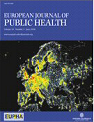
Volume 31, Issue 5, October 2021
Please note that the EJPH will be fully Open Access as of 1-1-2022.
Marianne MeijerMarieke VerschuurenElla Weggen
|
6. Call for proposals, job opportunities
Professorship Urban Public Health
To be appointed on January 1st, 2023 or upon arrangement.
Call for EONS Chief Operating Officer
The European Oncology Nursing Society (EONS) is looking for a new Chief Operating Officer (COO). The COO oversees the implementation of EONS’ strategic priorities and ensures the continued relevance to the membership of existing activities.
ISPUP is look for two assistant researchers
The Institute of Public Health of the University of Porto (ISPUP),intends to hire two auxiliary researchers in the scientific field of Public Health Sciences for conducting scientific research activities in the Epidemiology Research Unit – Institute of Public Health of the University of Porto (EPIUnit). |
7. Interesting news
What role did National Public Health Institutes in Europe play in monitoring the COVID-19 pandemic?
European Observatory on Health Systems and Policies | Cross country analysis | 24 November 2021
European Tobacco Industry Interference Index 2021
The European Tobacco Industry Interference Index 2021 analyzes how 16 countries in the WHO European Region and the institutions of the European Union are affected by tobacco industry, and how far they have progressed in the implementation of Article 5.3 and its Guidelines that were unanimously adopted.
Mapping conflict of interests: scoping review
The BMJ | Research – Special Paper | 3 November 2021
The G20 Disappoints on Global Health, but that’s OK with the United States
Think Global Health | Governance | 2 November 2021
Engaging and Supporting National Public Health Institutes as Key Climate Actors
On November 10th, the International Association of National Public Health Institute has launched the IANPHI Roadmap for Action on Health and Climate Change at the United Nations Conference on Climate Change (COP26) in Glasgow, Scotland.The roadmap highlights and advocates for the existing and potential key role of national public health institutes (NPHIs) in climate adaptation and mitigation, and how they contribute to climate policies, research and action.
Cities: Creating Transformative Spaces that Address Climate and Health
Think Global Health | 18 November 2021
Millions of helpline calls reveal how COVID affected mental health
Nature | 17 November 2021
Health at a Glance 2021 – OECD
Health at a Glance provides a comprehensive set of indicators on population health and health system performance across OECD members and key emerging economies. This edition also has a special focus on the health impact of COVID-19 in OECD countries, including deaths and illness caused by the virus, adverse effects on access and quality of care, and the growing burden of mental ill-health.
Communicating about vaccines: How to discuss racial equity in vaccine uptake
Berkeley Media Studies Group | Video | 10 November 2021 |
8. Upcoming courses and conferences
|
9. Interesting publications
Reaching net zero carbon emissions in health systems
The Lancet | World Report | 17 November 2021
The epidemiological relevance of the COVID-19-vaccinated population is increasing
The Lancet Regional Health Europe | Letter | 19 November 2021
COP26: an opportunity to shape climate-resilient health systems and research
The Lancet Planetary Health | Comment | 17 November 2021
The case for planetary health prevention
Journal of Epidemiology and Community Health | Commentary | 11 November 2021
Policy brief: European support for improving health and care systems (by the European Observatory on Health Systems and Policies and the Slovenian Presidency of the Council of the European Union)
https://eurohealthobservatory.who.int/pu…
Rethinking public health campaigns in the COVID-19 era: a call to improve effectiveness, equity and impact
The BMJ Global Health | Commentary | 26 November 2021
“As health campaigns restart and catch up on the delivery of missed drugs, vaccines and nutritional supplements, and countries roll out COVID-19 vaccines, there is an opportunity to rethink the way we plan and implement campaigns to improve their effectiveness and impact.”
Unless we address the inequity in global health, the world will not be prepared for the next pandemic
The BMJ | Opinion | 19 November 2021 |
10. European Commission news
Paper-to-policy posters
The paper-to-policy stories illustrate how research drives policy at the European Commission. Compiled from colleagues working at DG ECFIN and the JRC, the stories tell how colleagues identified a gap in the knowledge base or a new development in research and used it to improve policy.
Press statement by President von der Leyen on the new COVID variant
Europe’s Beating Cancer Plan: Commission publishes implementation roadmap
On November 18th, the European Commission published an implementation roadmap and progress indicators for Europe’s Beating Cancer Plan to monitor developments on the ten flagship initiatives as well as its other actions. The roadmap will undergo regular review by the Implementation Group. Have a look at the timeline to see what has been achieved in 2021 and what is planned for 2022.
Speech by Commissioner Kyriakides at The European Cancer Summit 2021: From Plans To Action
What makes the cancer policy under the Cancer Plan new and different? On November 16th, Commissioner Kyriakides presented the new Cancer Plan at the European Cancer Summit 2021.
Speech by President von der Leyen at the World Health Assembly
At the special session of the World Health Assembly on 19 November, President von der Leyen reaffirmed the EU’s commitment to uphold equity, good governance, multilateral cooperation and solidarity as the only ways out of the current health crisis. |
11. European Centre for Disease Prevention and Control news
[VIDEO] Five C’s to boost COVID-19 vaccination
Confidence – Constraints – Complacency – Calculation – Collective responsibility.
https://www.youtube.com/watch?v=rS3lDeqQGzs
Eurosurveillance – Volume 26, Issue 44, 04 November 2021
Rapid communication
Eurosurveillance – Volume 26, Issue 45, 11 November 2021
Editorial
Eurosurveillance – Volume 26, Issue 46, 18 November 2021
Rapid communication
Eurosurveillance – Volume 26, Issue 47, 25 November 2021
Rapid communication |
12. WHO news
Tobacco use falling: WHO urges countries to invest in helping more people to quit tobacco
Released on November 16th, the fourth WHO global tobacco trends report presents WHO estimates of tobacco use prevalence for 2020, numbers of users, and trends projected to 2025. Estimates are at global, regional and country-level. The report shows that there are 1.30 billion tobacco users globally compared to 1.32 billion in 2015. This number is expected to drop to 1.27 billion by 2025.
Joint Research Centre and World Health Organization join forces to use behavioural insights for public health
The European Commission’s Joint Research Centre (JRC) and the World Health Organization (WHO) concluded a Collaborative Research Arrangement that aims to mainstream behavioural insights into public health programmes and policies worldwide. The Commission, through the JRC, will assist WHO in expanding its behavioural insights for health programme.
New FAO-OIE-UNEP-WHO platform to tackle human, animal and environmental health challenges
Adhering to the theme of the World Antimicrobial Awareness Week for 2021 “Spread awareness, stop resistance”, the One Health partner platform provides an opportunity for United Nations agencies, international organizations, financial institutions, civil society, academia and the private sector to initiate a thematic dialogue on One Health issues in the countries of Europe and central Asia.
Regions for Health Network members share experiences during 26th annual meeting
At the 26th Regions for Health Network (RHN) annual meeting, 80 speakers from 15 countries and 26 regions, along with numerous international partners, discussed key future priorities, COVID-19, and climate change and the environment.
COP26 highlights links between COVID-19 and the SDGs, reinforcing need for bold action in the recovery process
In a new paper published in The Lancet Planetary Health, a group of WHO and independent researchers used WHO/Europe’s E4As approach – “engage to assess, align, accelerate and account” – to show how policy-makers can ensure that recovery from COVID-19 leads to healthier and more sustainable societies.
Europe’s lessons learned in COVID-19 contact tracing
WHO/Europe has been collecting and sharing best practices in contact tracing from countries of the WHO European Region. It aims to document a variety of approaches based on several factors, including capacity, methodology, tools, community engagement and culture.
Special session of World Health Assembly 29 November 2021 – 1 December 2021
During the session, the Member States will consider the following single substantive agenda item:
Too much for one planet: WHO study proposes new tools to make our diets healthy and environmentally friendly
Modern food systems in the WHO European Region and beyond are associated with poor public health outcomes and are unsustainable. To address this global problem, the new WHO study “Sustainable food profiling models to inform the development of food labels that account for nutrition and the environment”, published in The Lancet Planetary Health, proposes a procedure for labelling foods according to their environmental and nutritional impact. |
|
This newsletter received co-funding under an operating grant from the European Union’s Health Programme (2014-2020). The content of this newsletter represents the views of the author(s) only and is his/her sole responsibility; it cannot be considered to reflect the views of the European Commission and/or the Consumers, Health, Agriculture and Food Executive Agency or any other body of the European Union. The European Commission and the Agency do not accept any responsibility for use that may be made of the information it contains.
|
|
Unsubscribe
If you would like unsubscribe from the EUPHA newsletter then please click here.
|