 |
The European Public Health Association Newsletter – May 2019 |
1. Editorial
In this month, the first ever European public health WEEK took place. With more than 145 events from 35 countries, we were overwhelmed with its success. At the moment, we are evaluating this week, but we can already announce that we will organise the 2nd European public health week next year in May. We also had the 9th European parliamentarian elections taken place. It was indeed a busy month for Europe and for public health, which is reflected in this newsletter.
Wishing you pleasant reading,
Natasha Azzopardi Muscat, EUPHA president, and Dineke Zeegers Paget, EUPHA executive director
|
2. EUPHA update
What are the European Union political parties planning for your health?
The EUPHA statement ‘What are the European Union political parties planning for your health?’ is a response to the European Union parties’ manifestos. The manifestos of the political parties seem not to prioritise health. Read our full analysis of the manifestos and our calls for action in the EUPHA statement.
Discover the TO-REACH Strategic Research Agenda
The TO-REACH Consortium is pleased to share its draft Strategic Research Agenda (SRA). The SRA has the ambition to address the increasing challenges faced by health systems, directed to those research areas of major relevance in the coming years.
Your answers
In our previous newsletter the question ‘to which do you identify the most; Researcher, Policymaker, or Practitioner?’
Third Forum of the EU Scientific Panel for Health
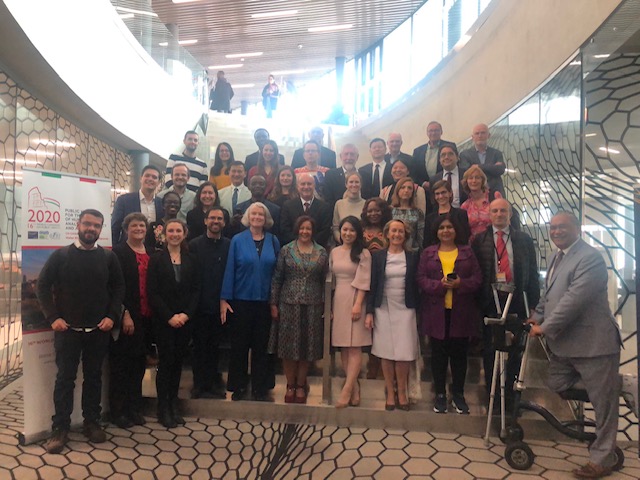
On 6 May in Brussels, the third forum of the EU Scientific Panel for Health was organised. The EUPHA research pillar lead, executive director and scientific director attended this meeting to discuss current and future health research priorities. It was the first time that public health research was discussed. Prof. Mark McCarthy, leader of the STEPS, PHIRE and SPHERE projects where EUPHA was involved, gave a presentation on lessons learned from these public health research projects.
WFPHA General Assembly meeting
On 26 and 26 May, the General Assembly of the World Federation of Public Health Associations took place in Geneva, Switzerland. Several of our members were represented as well as our president and executive director. Prof Charles Agyemang (vice president of EUPHA MIG) gave a presentation on the Global Society on Migration, Ethnicity, Race and Health, that will be established in 2020.
ASPHER Deans and Directors meeting
On 26-28 May, ASPHER organised its annual Deans and Directors meeting and we were happy to be there both at their General Assembly as well as the two-day meeting that followed. The meeting was organised by Carlo Signorelli (EUPHA treasurer) and presentations were given by Martin McKee (immediate past president), Natasha Azzopardi Muscat (president) and Dineke Zeegers Paget (executive director). The meeting confirmed the strong links between EUPHA and ASPHER.
Summary of WHO Euro-EUPHA workshop on digital health available
The summary of the WHO Europe and EUPHA joint session on the beautiful marriage between digitilization and public health, organised during the WHO Symposium on the Future of Digital Health Systems in the European Region in February 2019 is now available here.
President-elect at Chrodis-Plus conference in Budapest
Dr Iveta Nagyova, president-elect of EUPHA, attended the CHRODIS-PLUS Conference- Tackling the challenges of chronic diseases in Europe on14-15 May 2019 in Budapest.
EUPHA CHR partnering up for a conference in Slovakia
The International Conference on Chronic Diseases „Chronic Diseases and Integrated Care: Rethinking Health and Welfare Systems” – organized by the EUPHA section on Chronic diseases in collaboration with local partners, national public health associations of Visegrad 4 countries, and the SCIROCCO Exchange consortium, will take place fon 24-25 October 2019 in Kosice, Slovakia.
Public mental health in 2018 – report
On the 5th day of the European Public Health WEEK, EUPHA published the ‘Public mental health in 2018’ report, summarizing the mental health track from the 11th European Public Health Conference, held 28 November till 1 December 2018 in Ljubljana, Slovenia. It reports on key messages from the sessions and discussions in Ljubljana.
EUPHA HWR publishes ‘Who cares for the workforce?’
On the 3rd day of the European Public Health Week, EUPHA HWR published a statement on the question ‘who cares for the workforce?’, urging future parliamentarians and future commissioners to consider supporting Member States’ efforts to build a health workforce fit to ‘Ensure healthy lives and promote wellbeing for all at all ages’, the Sustainable Development Goal, which all Heads of States have committed to pursue. |
3. EUPHW
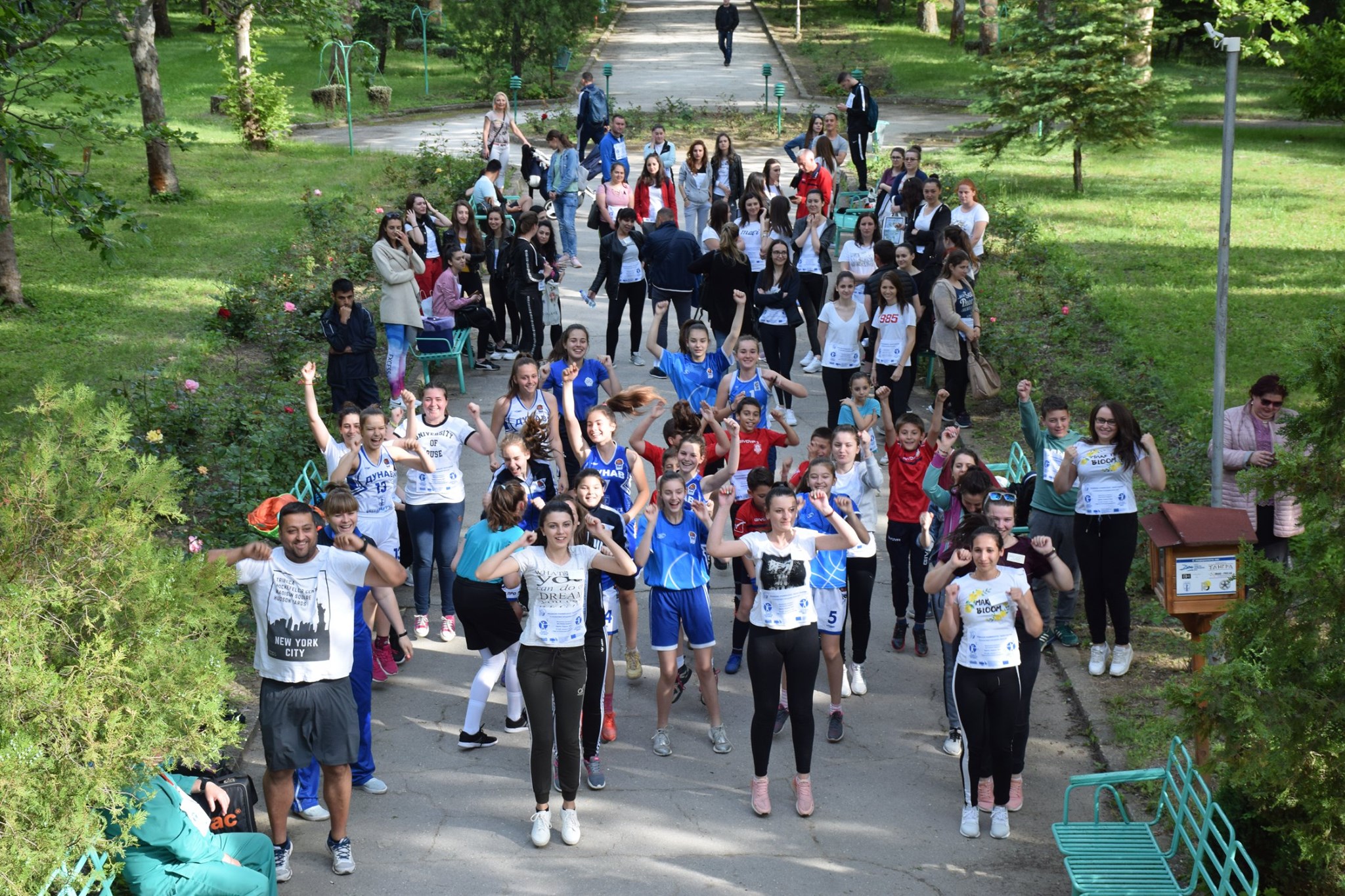
Thanks to all of you, the first ever EUPHW exceeded all our expectations! During one week there were 145 events in 35 countries to promote
Thank you for celebrating healthy populations and raising awareness of important public health issues with us!
|

4. European Public Health Conference
Abstracts
We thank all colleagues for submitting their abstracts. We received an all-time record of 2,025 abstracts for individual presentations (oral, pitch, e-posters) and 150 abstracts for workshops. Abstracts have been reviewed by the 90 members of our International Scientific Committee (ISC). The review results will be announced by mid-June. Check your emails.
Registration
Registration for the 12th EPH Conference is open. We are expecting over 1,500 delegates. Don’t miss the largest public health event in Europe and register early to benefit from the reduced rates. Early bird registration fees for EUPHA members are EUR 600. Non-members pay EUR 680, students EUR 420 (all including VAT). Registration here.
Theme
Main theme of the conference is ‘Building bridges for solidarity and public health’. More information. Plenary sessions:
Plenary sessions are organised in collaboration with our partners: EUPHA, EuroHealthNet, ASPHER, EHMA, European Observatory on Health Systems and Policies, European Centre for Disease Prevention and Control, European Commission, WHO Regional Office for Europe.
|
5. EUPHA members update
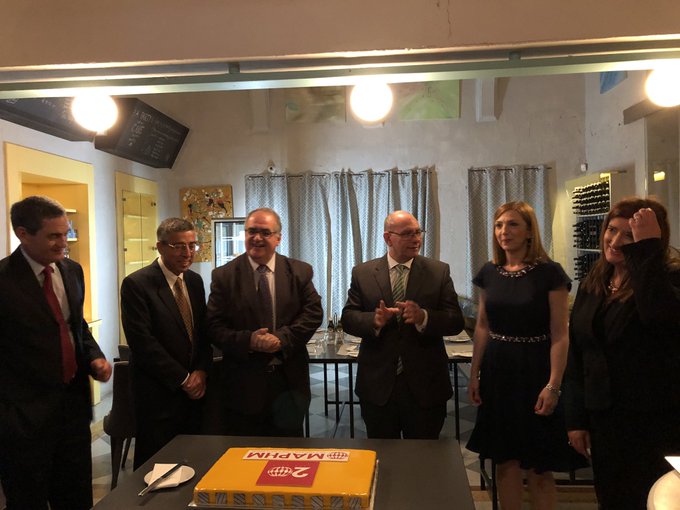
Maltese Association for Public Health Medicine celebrates its 20th anniversary
For this celebration, all members of the MAPHM were invited to reflect upon the main public health issues facing Malta and the added value of a vibrant public health community that has shaped the development of health and health systems in Malta during this period. The result is an overview of public health in Malta encompassing simultaneously a unique collection of historical processes and events made available in the public domain for the first time, together with the evidence-base needed to address the key challenges foreseen in the coming years.
https://maphm.org/publications/
French Society launches anti-tobacco project
This three-year project – D-CAP- is funded by the Tobacco Control Fund the D-CAP project and aims to build an experiential knowledge of smoking prevention actions for young people aged 12 to 25 and vulnerable people. This choice is part of a contribution to reducing social inequalities in health. |
6. European Journal of Public Health
Volume 29, Issue 3, June 2019
EDITORIAL
HEALTH SERVICES RESEARCH
A microsimulation model projecting the health care costs for resistance to antibacterial drugs in Sweden
Determinants of medication adherence among chronic patients from an urban area: a cross-sectional study
Neus Pagès-Puigdemont
CHILD AND ADOLESCENT HEALTH
Practical generic guidelines for paediatric-to-adult transition for adolescents with chronic disease
Enora Le Roux
MIGRATION AND HEALTH
Tuberculosis knowledge, attitudes and practices: a cross-sectional study in the Somali population living in Finland
The HTQ-5: revision of the Harvard Trauma Questionnaire for measuring torture, trauma and DSM-5 PTSD symptoms in refugee populations
S Megan Berthold
MENTAL HEALTH
Group activity participation at age 21 and depressive symptoms during boom and recession in Sweden: a 20-year follow-up
Debt and mental health: new insights about the relationship and the importance of the measure of mental health
Margareta Dackehag
INFECTIOUS DISEASE
Populist politics and vaccine hesitancy in Western Europe: an analysis of national-level data
Jonathan Kennedy
WORK AND HEALTH
Health and socioeconomic circumstances over three generations as predictors of youth unemployment trajectories
Who suffers from the cumulation of atypical employment? A longitudinal analysis based on Dutch data
Ioana van Deurzen
SOCIOECONOMIC DETERMINANTS
EDITOR’S CHOICE
Education and mortality in three Eastern European populations: findings from the PrivMort retrospective cohort study
MISCELLANEOUS
EUROPEAN PUBLIC HEALTH NEWS
European Public Health News
|
7. Call for proposals, job opportunities
Call for Papers for Two new Sections!
BMC Public Health will be launching two new Sections:
https://bmcpublichealth.biomedcentral.co…
|
8. Interesting news
Doctors are prescribing the great outdoors, but that’s not great for everyone
https://www.popsci.com/nature-prescripti…
‘Always read the small print’: a case study of commercial research funding, disclosure and agreements with Coca-Cola
https://www.ncbi.nlm.nih.gov/pubmed/3106…
The World Health Organization knows ‘burnout’ is a problem–but is it a disease?
https://www.popsci.com/burnout-icd-medic…
Busting the myth that depression doesn’t affect people in poor countries
https://www.theguardian.com/society/2019…
Exclusive: Philip Morris suspends social media campaign after Reuters exposes young ‘influencers’
https://www.reuters.com/article/us-phili…
Study pulls back curtain on contracts between Coca-Cola and the researchers it funds
https://www.statnews.com/2019/05/07/coca…
Dietary cholesterol or egg consumption do not increase the risk of stroke, Finnish study finds
A new study Finland shows that a moderately high intake of dietary cholesterol or consumption of up to one egg per day is not associated with an elevated risk of stroke. Furthermore, no association was found in carriers of the APOE4 phenotype, which affects cholesterol metabolism and is remarkably common among the Finnish population.
Heated tobacco and politics: highlights from Italy
In Italy, a “sunshine act” proposal to make financial links between health care professionals and Industry more transparent has been approved by the Chamber of Deputies and is currently being discussed by the Senate for definitive approval.
The EU adopts a new Regulation that strictly limits the amount of industrially produced trans fat in all foods sold to EU consumers
The maximum limit corresponds to 2 grams of industrially produced trans fats per 100 grams of fat in food intended for the final consumer and food intended for the supply to retail. Foods must comply by 2 April 2021. See the factsheet for more!
What do you know about Direct-To-Consumer Genetic Testing?
The present survey evaluates the public health professionals’ knowledge, attitudes and behaviours towards Direct-To-Consumer Genetic Testing (DTC-GT). DTC-GTs are defined as genetic tests that are both marketed and sold directly to the public, including over the counter, without the supervision of a healthcare professional.
Royal Society of Public Health publishes public mental health report
A report entitled ‘Public Mental Health: Evidence, practice and commissioning’ was recently published at https://www.rsph.org.uk/about-us/news/launch-of-public-mental-health-evidence-practice-and-commissioning.html
European Observatory: Averting the AMR crisis
This new policy brief summarizes some of the key policy avenues for tackling antimicrobial resistance (AMR). Following the widely accepted ‘One Health’ approach to combating AMR, the brief aims to support the implementation of national action plans (NAPs) on AMR, drawing on numerous examples of effective policies implemented by European Union Member States and involving the human, animal and environmental health sectors.
The first year of the Joint Action on Tobacco Control
The Joint Action on Tobacco Control (JATC) was launched in October 2017. This comprehensive EU funded project aims to provide support for the implementation of the Tobacco Products Directive (TPD)* across the 28 EU Member States and to improve the protection of EU Public Health. |
9. Upcoming courses and conferences
Going International is the first source for finding courses, seminars, congresses and other events in the fields of medicine & health. Going International is Europe’s biggest service provider and information platform and serves as an interface between organisers and participants of events. Going International is an official partner of EUPHA.
|
10. Interesting publications
Burden of Stroke in Europe Report
https://strokeeurope.eu/media/download/
Associations of extracurricular physical activity patterns and body composition components in a multi-ethnic population of UK children (the Size and Lung Function in Children study): a multilevel mode
https://bmcpublichealth.biomedcentral.co…
An app a day is only a framework away
https://www.thelancet.com/journals/landi…
Point of choice kilocalorie labelling in the UK eating out of home sector: a descriptive study of major chains
https://bmcpublichealth.biomedcentral.co…
Risk of dying unnaturally among people aged 15-35 years who have harmed themselves and inflicted violence on others: a national nested case-control study
https://www.thelancet.com/journals/lanpu…
Associations between overweight and mental health problems among adolescents, and the mediating role of victimization
https://bmcpublichealth.biomedcentral.co…
Towards a public health approach to psychotic disorders
https://www.thelancet.com/journals/lanpu...
Economic burden of multiple sclerosis in a population with low physical disability
https://bmcpublichealth.biomedcentral.co…
Social inequities in vaccination coverage among infants and pre-school children in Europe and Australia – a systematic review
https://bmcpublichealth.biomedcentral.co…
Burden of non-communicable diseases among Syrian refugees: a scoping review
https://bmcpublichealth.biomedcentral.co…
Epidemiology of needlestick and sharp injuries among health care workers based on records from 252 hospitals for the period 2010-2014, Poland
https://bmcpublichealth.biomedcentral.co…
Association of environmental and sociodemographic factors with life satisfaction in 27 European countries
https://bmcpublichealth.biomedcentral.co…
Deriving a practical framework for the evaluation of health apps
https://www.thelancet.com/journals/landi…
Financing a healthy civilisation
https://www.thelancet.com/journals/lanpl…
Communicating the health of the planet and its links to human health
https://www.thelancet.com/journals/lanpl…
Assessing non-prescription and inappropriate use of antibiotics
Eighteen countries and areas that are members of the WHO Regional Office for Europe Antimicrobial Medicines Consumption Network undertook a survey to assess the current status of regulatory and national/area-level activities in eastern European and central Asian countries and areas to support the appropriate use of antibiotics.
Anti-tobacco text warnings in Italy: Geography, language and South Tyrol
http://www.seejph.com/index.php/seejph/a…
Russia: A key partner in the Northern Dimension Partnership
http://www.seejph.com/index.php/seejph/a…
|
11. European Commission news
EU Health Programme supports OECD report and EU/EEA Country Notes on “Improving Forecasting of Pharmaceutical Spending”
With the support of Health Programme, the OECD has published the report on “Improving Forecasting of Pharmaceutical Spending” and the 23 EU/EEA Country Notes. The report explores the different approaches to track pharmaceutical utilisation and expenditure and to anticipate changes in pharmaceutical market dynamics. It examines how EU/EEA countries use them to inform the setting of budgets and spending caps, and as inputs to modelling future expenditure.
European system of tobacco traceability and security features
The European system of tobacco traceability and security features has become operational as of 20 May. The first producers in the EU have requested and received traceability markings for cigarettes and roll-your-own tobacco products.
Statement by Vytenis Andriukaitis, Commissioner for Health and Food Safety on World No Tobacco Day: Let’s work together to leave smoking in the past
On 31 May, we celebrate World No Tobacco Day by raising awareness about the harmful and deadly effects of smoking and the use of tobacco products. On a global level, the figures are staggering – there are more than 7 million tobacco-associated deaths around the world each year. This is one of the main reasons why the EU and its Member States are active supporters of a global health treaty – the Framework Convention on Tobacco Control of the World Health Organisation.
Shopping around… for Mental Health best practices!
Irene Norstedt, Acting Director for Health research at the Commission’s Directorate General for Research and Innovation, and John F. Ryan, Director of Public Health at the Directorate General for Health and Food Safety, talk about the Third Marketplace of Best Practices in Ispra, Italy, which was organised by the Steering Group on Prevention and Promotion. This year’s best practices focused on mental health.
Global Vaccination Summit to take place on 12 September 2019 in Brussels
The Summit, organised by the Commission and the WHO, will bring together around 400 participants from around the globe, including high-level political decision makers, health ministers, UN organisations, NGOs, researchers, healthcare professionals and others.
Special Eurobarometer results – 85% of EU citizens say vaccination is effective at preventing infectious disease
This Eurobarometer published by the Commission showed mostly great confidence in vaccines, but also that 48% Europeans believe – incorrectly – that they can often produce severe side effects, and 38% think vaccines can cause the diseases against which they protect.
Insufficient vaccination coverage in EU/EEA fuels continued measles circulation
A large measles epidemic has affected the EU/EEA Member States in the past three years, with 44 074 cases reported by 30 Member States between 1 January 2016 and 31 March 2019.
Promoting Vaccine Confidence: Commissioner Andriukaitis Attends the 72nd World Health Assembly
Currently, the EU is the region with the lowest confidence in the safety and effectiveness of vaccines. This confidence is influenced by a number of factors, including how important, safe and effective citizens perceive vaccines to be. We urgently need to do more to reinforce the truth about both vaccines and diseases. |
12. European Centre for Disease Prevention and Control news
Eurosurveillance – Volume 24, Issue 18, 02 May 2019
Outbreaks
Eurosurveillance – Volume 24, Issue 19, 09 May 2019
Perspective
Eurosurveillance – Volume 24, Issue 20, 16 May 2019
Rapid communication
Research
Eurosurveillance – Volume 24, Issue 21, 23 May 2019
Rapid communication Research
Letter
|
13. WHO news
Over 100 000 people sick with measles in 14 months: with measles cases at an alarming level in the European Region, WHO scales up response
Since 1 January 2018, 47 of the 53 countries in the WHO European Region have together reported over 100 000 measles cases and over 90 measles-related deaths. WHO scales up its response to curb this alarming trend.
New WHO guidelines promote healthy lifestyle to reduce risk of dementia
The guidelines, advocate a healthy lifestyle and in particular physical activity as a way to help prevent dementia. In the WHO European Region, some 10 million people are estimated to have dementia, but few countries in the Region have a national action plan for dementia.
Fast track to strong primary health care
Universal health coverage – the ideal that all people can access health services where and when they need them, without financial hardship, is a WHO priority.
Nurse and midwife leaders delivering health for all in the WHO European Region
Nurse and midwife leaders in the WHO European Region work at all levels of health systems and across diverse contexts delivering quality care, leading teams, conducting research, educating the next generation of nurses and midwives, strengthening the workforce through training or by empowering management, and influencing policy.
Opinion: a coalition for more innovation in public health
In her April 2019 column for the European Journal of Public Health, Dr Zsuzsanna Jakab, WHO Regional Director for Europe, writes about the recently established Coalition of Partners (CoP) for strengthening public health services.
New WHO report on Traditional and Complementary Medicine
WHO organised a meeting at the WHO Headquarters in Geneva on 21 May that was dedicated to the official release of the “WHO Global Report on Traditional and Complementary Medicine 2019”.
|
|
This newsletter received funding under an operating grant from the European Union’s Health Programme (2014-2020). The content of this newsletter represents the views of the author(s) only and is his/her sole responsibility; it cannot be considered to reflect the views of the European Commission and/or the Consumers, Health, Agriculture and Food Executive Agency or any other body of the European Union. The European Commission and the Agency do not accept any responsibility for use that may be made of the information it contains.
|