The European Public Health Association (EUPHA) calls on every health ministry in Europe to take a full and active part in implementing the EU Pact on Migration and Asylum. The Pact has been in force since 12 June 2026. Interior ministries negotiated it and still run it largely. Yet almost every operational step it requires, from screening at the border to reception, detention, and integration, falls on health systems.
The Pact settles which state is responsible for a person. It leaves open who is responsible for that person’s health. Our concern is with what the Pact asks of health systems and whether they are equipped to deliver it. Only health ministries can answer that question, and they should do so now, while implementation decisions are still being taken.
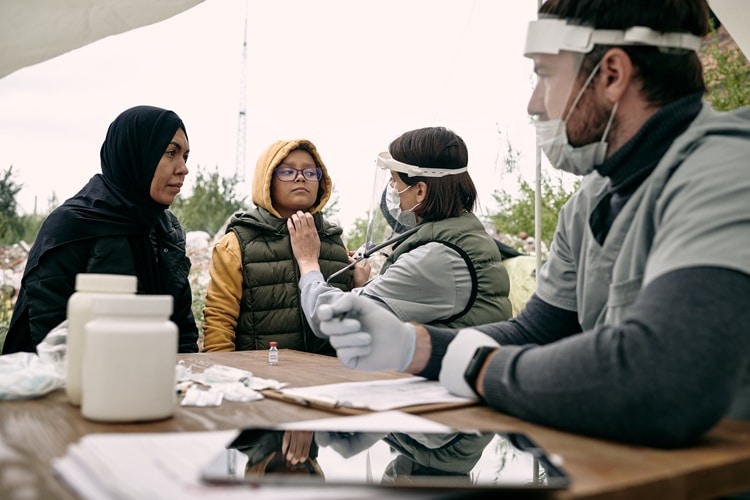
There are four reasons why health ministries must be fully engaged. First, the Pact creates health obligations. Health is a fundamental right, enshrined in the WHO Constitution and in the laws of European states. The Screening Regulation requires a preliminary health check and vulnerability assessment within seven days of arrival at EU external borders or not later than three days for those already within the national territory of a member state. The recast Reception Conditions Directive entitles applicants to necessary health care, now explicitly including mental health care. Only health systems can meet these duties, and the Pact leaves almost entirely to national decision who carries out the checks, with what training and with what referral route.
Second, health systems will pick up the pieces if things go wrong. Many people arriving in Europe come from countries where health care and vaccination programmes have collapsed. Many of the health challenges experienced by migrants and refugees, including communicable and noncommunicable disease, are related to adverse conditions and exposures before, during, and after migration, including barriers to accessing healthcare and other essential services. Missed tuberculosis, interrupted treatment for HIV/AIDS or diabetes, and unrecognised trauma all cost more to treat later and cause avoidable suffering. Entitlement on paper is not access in practice: language barriers, missing documentation, and staff shortages where arrivals are concentrated all stand in the way. Early, competent care protects the individual, the wider public and the public purse.
Third, we know that detention can damage health. The border procedure can hold people for up to 12 weeks, often in closed facilities, and member states have committed to 30,000 such places. The evidence that detention damages mental health is not contested. Health ministries and public health agencies must have a say in the standards applied inside these facilities, including return hubs.
Finally, we lack any reassurance that the health voice is present. Early assessments suggest that national implementation has often aimed at minimum compliance and has done little to strengthen reception and asylum systems. The European Commission has reported that screening arrangements and reception capacity still need work. Solidarity contributions are counted per person relocated, so the health costs borne by frontline states such as Greece, Italy, Spain and Cyprus, or by countries defined by the European Commission as being ‘at risk of migratory pressure’, do not appear in the calculation. Unless health ministries speak, those costs will stay invisible.
EUPHA asks health ministries to act in six areas.
- Secure a formal role for the ministry of health and public health agencies, alongside the interior ministry, in the national implementation plan, its oversight and national contingency planning. Separate authorities too often run border, reception and municipal health services with separate budgets and record systems; ministries should bring them together.
- Set the clinical standards for the mandatory health check and vulnerability assessment: who performs it, what it covers and especially how its quality is assured. Trained health professionals should carry it out, using evidence-based guidelines.
- Care pathways. Define a route from screening into mainstream services, with continuity of care when people are moved, relocated or transferred between states. Make specific provision for children, pregnant women and survivors of torture and sexual violence.
- Border and reception facilities. Set and inspect health standards in border-procedure and reception facilities, guarantee access to mental health care, and ensure that the fundamental rights monitoring required by the Pact covers health.
- Train and deploy health workers, interpreters and cultural mediators where arrivals are concentrated, and include migrant health in professional curricula.
- Data and financing. Collect comparable data on health needs and outcomes in reception and border facilities. Build health records that can follow the person: Eurodac holds biometrics but nothing a clinician can use. Make sure health costs are counted in the Pact’s funding and solidarity arrangements.
Health ministries were largely absent when the Pact was negotiated. They cannot be absent during implementation. Whatever view governments take of migration policy, the Pact’s health duties are binding, and the consequences of neglecting them are predictable. Decisions taken in capitals over the coming months will determine whether the Pact protects the health of people who arrive in Europe and of the communities that receive them.
EUPHA and its member associations stand ready to support ministries with evidence, comparative analysis and professional expertise, working with the European Commission, the WHO Regional Office for Europe and the European Observatory on Health Systems and Policies. We urge every minister of health to claim their place at the table.