 |
The European Public Health Association Newsletter – November 2025 |
|
Newsletter – November 2025
|
1. Editorial
Reflections from Helsinki: Strengthening Public Health Together
As we return from a thoughtful and energising week in Helsinki, we want to extend our sincere thanks to everyone who participated in the 18th European Public Health Conference. Across plenaries, parallel sessions, workshops, and informal conversations, the commitment and openness of this community were evident at every turn.
This year’s theme — Investing for sustainable health and well-being — connected strongly with the realities many of you described throughout the week. At the opening ceremony, we shared a short video that captured the pressures facing public health: climate impacts, conflict, misinformation, and widening inequalities. It also underlined something essential — that every challenge is a call to act together, as a united public health community navigating not only sustained pressures but, increasingly, targeted attacks on evidence, expertise, and institutions across Europe and beyond.
Throughout the conference, one message came through repeatedly: Europe’s public health systems are being asked to do more under increasingly difficult conditions. Yet the discussions in Helsinki also highlighted practical solutions, new partnerships, and a readiness to adapt. It was clear that many of you are finding ways to move forward despite uncertainty.
The Wednesday plenary hosted by EUPHA with our Health Literacy Section, was a key moment in this shared conversation. We dedicated this session to one of the most pressing challenges affecting public health practice today: the rise of misinformation and disinformation, and the deeper erosion of trust that shapes public understanding across Europe.
Speakers explored the differences between scientific controversy, misinformation, and deliberate distortion, and reflected on why fact-based communication often struggles to reach people. A key takeaway was the need to pair evidence with empathy, clarity, and narratives that speak to diverse lived experiences.
The plenary also drew attention to the human and societal consequences of long-term underinvestment: reduced crisis preparedness, widening inequalities, and growing pressures on ageing populations. Discussions on political polarisation as a determinant of health and on the arms industry as a commercial determinant highlighted the broader forces influencing public understanding and policy. Several contributors pointed to the role of conspiracy narratives and algorithmic amplification in shaping perceptions in ways that public health must now actively address.
The session closed with a call for stronger support for public health at all levels — and for equipping professionals with the tools and confidence needed to communicate effectively in a complex information landscape. Practical examples showed how peer-to-peer approaches, youth-driven storytelling, and more creative media formats can help reconnect with the public.
As we look ahead, the reflections shared in Helsinki underline both the challenges and the resilience within our field. The path forward will require sustained investment, constructive collaboration, and communication approaches that meet people where they are.
A central part of that work is the Helsinki Statement on Investing in Health and Well-being, which remains open for endorsement. Organizations across Europe can still sign and add their voice. This is not a one-off moment — we will build on it throughout 2026, especially during European Public Health Week (4–9 May 2026), when we will work with partners to bring the statement to life in countries and communities. This is a strategic priority for EUPHA: strengthening the bridge between shared European commitments and national action.
Thank you to everyone who contributed your experience, insight, and energy at this year’s conference. Let’s carry that momentum into the months ahead — until we meet again in Bilbao in November 2026.
Dr. Tit Albreht, EUPHA President
|
2. EUPHA news
Upcoming EUPHA Section webinar
Our Sections continue to bring together experts from across Europe and beyond to explore today’s most pressing public health challenges. Join us to stay informed, share knowledge, and connect with the latest research and policy developments.
16 December 2025, 16:00 – 17:00 CET
Professor Marit Eika Jørgensen will share new genetic and epidemiological insights into diabetes among the Greenlandic Inuit population, showing how large-scale mapping is shaping more targeted prevention and treatment strategies.
Webinar: Health in All Policies for a more resilient Europe
3 December 2025 — 11:00–13:00 CET
EUPHA will host a webinar on Health in All Policies (HiAP), exploring how public-health professionals can strengthen governance, preparedness, and resilience in a fast-changing environment marked by climate shocks, hybrid threats, digital transitions, and widening inequalities.
The session will be led by Julian Fisher (Zero Water Day Partnership; GNHiAP expert) and Charlotte Marchandise (Executive Director, EUPHA), with contributions from Geoffrey Namara (WHO Pandemic Hub, Berlin), Meri Koivusalo (Tampere University; WHO Collaborating Centre / GNHiAP) and Kanza Ahmed (UK Health Security Agency).
They will discuss how HiAP can link health, security and resilience; the four pillars of HiAP (governance, leadership, methods, resources); strategies for cross-sector collaboration; and practical examples from preparedness, climate action and local government. The session includes interactive polls and a live Q&A.
Spotlight: Climate impacts on health — insights from Spain
Heat waves, wildfires and flooding are no longer future risks — they are already affecting health across Spain, with urban areas hit hardest. Recent reflections from experts, including Manuel Franco, President of the EUPHA Urban Public Health Section and Chair of the 2026 EPH Conference in Bilbao, highlight how climate-driven hazards are widening health inequalities and placing growing pressure on local health systems. The message is clear: strengthening preparedness, prevention and urban resilience must be central to Europe’s public-health agenda.
Read the full interview on Cadena SER (in Spanish).
Showcasing our project partnerships at EPH Conference 2025
EUPHA was proud to see three of our EU-funded project collaborations take the stage at this year’s EPH Conference. RIVER-EU, PROPHET and EARLY each presented key findings, tools and forward-looking insights that contribute to stronger, more equitable public health across Europe. Below, you’ll find a brief recap of each session, highlighting the progress and impact achieved through these partnerships.
The RIVER-EU (Reducing Inequalities in Vaccine Uptake in the European Region) team presented new evidence and lessons learned from work with underserved communities in Greece, the Netherlands, Poland, and Slovakia. At the RIVER-EU consortium meeting, partners shared strategies to overcome access barriers and adult vaccine hesitancy — emphasizing trust, cultural sensitivity, and flexible, community-rooted implementation.
Two upcoming tools were highlighted: guidelines to improve access to vaccination services and an action framework for practical implementation. Both are based on evidence from local settings and aim to support policymakers and practitioners working to boost equitable vaccine uptake.
A linked scientific session reinforced the importance of rebuilding trust post-COVID, addressing misinformation, and engaging directly with communities. The RIVER-EU approach demonstrates that sustainable vaccination programmes require listening to lived experience, adapting to changing contexts, and building long-term relationships at the local level.
Discover more about RIVER-EU.
Round Table: Personalized Prevention Roadmap for Future Healthcare (PROPHET): SRIA and Implementation Roadmap
The PROPHET team introduced its Strategic Research and Innovation Agenda (SRIA) and implementation roadmap for personalized prevention in Europe. The roundtable showcased the first comprehensive framework for personalized prevention, including key definitions, indicators, and case studies highlighting the role of multidisciplinary teams and the link to HTA data.
Speakers emphasized how the EU Health Technology Assessment Regulation (HTAR) and the European Health Data Space (EHDS) can enable integration of personalized prevention. Chiara de Waure (EUPHA‑HTA) noted the potential and challenges of the HTAR, while Lia Martina (DG SANTE) and Astrid Vicente (Instituto Nacional de Saúde Doutor Ricardo Jorge, Portugal) stressed that EHDS offers a “trusted pathway” for ethical, cross-border data use. Martina Cornel (Amsterdam UMC) called for practical systems—such as EHR alerts and coordinated training—to bring pharmacogenomic prevention into daily care.
Marc van den Bulcke (Sciensano) emphasized that the PROPHET roadmap will serve as a foundation for future Joint Action collaboration across Member States. In his closing remarks, Walter Ricciardi (WFPHA) urged strong political mandates for prevention:
The session reinforced the need to align political support, regulation, and real-world implementation, with PROPHET well-positioned to support this transformation.
Discover more about PROPHET.
Exploring Youth Mental Health Determinants Across Europe
Discover more about EARLY.
Youth Voices from Germany, Poland & Serbia
As Jutta Lindert (EUPHA PMH) noted: “There is a continuum in between mental health and mental health conditions in language of young people. Further language analysis is needed to fully understand how perceptions change over time.”
Local Innovation: Helsinki’s Mobile Youth Support Teams
Kicking off a bold new path for food policy in Europe
Supported by HFHP and facilitated by Mareike Britten, the project’s first strategy workshop focused on aligning partner efforts across public health, environmental justice and consumer advocacy. Together, we identified shared leverage points and refined common Theory of Change – for driving systemic change in food environments across Europe. The energy in the room to break silos and work together across disciplines — from science to grassroots advocacy – was especially encouraging.
Realigning strategies in a shifting political landscape
For EUPHA, this project is a natural extension of our mission to connect evidence, engagement, EUPHA events and policy. We’re excited to bring public health voices to the table, support scientific evaluation of accountability policies, and amplify grassroots momentum through our networks. This is the beginning — and we’re ready to build healthier, more sustainable food environments together. Get in touch if you want to know more.
Discover more about the project.
Last reminder: Have your say on the EU Clinical Trials Regulation
The European Commission and HaDEA are assessing how the EU Clinical Trials Regulation (EU 536/2014) is working in practice. Public health professionals are invited to share their experiences through an online survey to help evaluate the Regulation’s relevance, effectiveness, and efficiency.
Participation will allow you to share your experiences directly with the European Commission to help assess the Regulation’s progress towards achieving its objectives, the effectiveness of the measures in place, and the efficiency of its processes.
The results will inform the European Commission’s report to the European Parliament and the Council. The survey closes soon. Participation is voluntary and fully confidential.
For questions, please contact [email protected].
|

3. European Public Health Conference
EPH Conference 2025 brings together 3,000 delegates in Helsinki
The 18th European Public Health Conference took place on 11–14 November 2025 in Helsinki, bringing together 3,000 delegates from 88 countries for four days of exchange, collaboration and forward-looking discussion. The Conference created a vibrant space where researchers, policymakers, practitioners and students could reflect on the most pressing challenges facing public health today.
Participation was strong across Europe, with Finland, the Netherlands, Italy, the United Kingdom, and Germany among the top represented countries. The global character of EPH 2025 was equally strong. Delegates travelled from across the world to join the discussions, including representatives from 18 countries that were represented by a single participant — a reminder of the inclusive and far-reaching nature of the EPH community.
As we close another successful edition of the Conference, we extend our thanks to everyone who contributed to an inspiring and productive week.
Prize winners
This year, we proudly recognized outstanding contributions from early-career researchers and public health professionals whose work is helping to advance public health across Europe. Congratulations to all award winners — your research strengthens our collective ability to protect and improve health across the region.
Ferenc Bojan Young Investigators Award
Highest Scoring Abstract
Best Poster
Special Eurohealth issue
A dedicated Eurohealth edition marks EPH 2025, exploring how investment in health drives equity, resilience, and sustainability. It features insights from plenary speakers and reflections from EPH Fellows and EUPHAnxt.
A thank you to Floris Barnhoorn
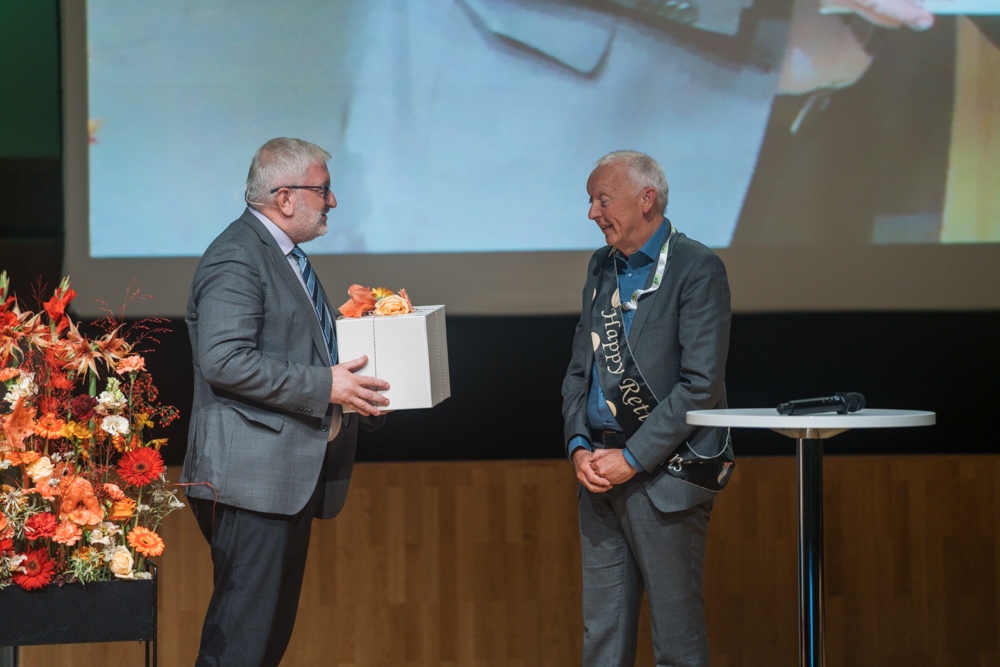
A particularly special moment in Helsinki was dedicated to Floris Barnhoorn, who retired at the end of the Conference. Floris has helped shape and grow the EPH Conference since 2009, where his commitment, expertise, and steady guidance over more than a decade have been central to the success of these gatherings.
Floris — thank you for everything.
Looking ahead to Bilbao — EPH 2026
The 19th European Public Health Conference will take place in Bilbao, Spain, at the Euskalduna Conference Centre, on 10–13 November 2026, under the theme: Urban and global synergies: shaping the future of public health with climate resilience, equity and innovation
More details will follow in 2026 — but save the date for now!
|
4. Upcoming courses and conferences
|
5. Interesting publications
Quality of care in an era of global challenges: A transformational vision for WHO European Region and beyond
Health systems today face overlapping pressures—from demographic shifts, workforce shortages, climate change, and geopolitical and economic instability. This strains their ability to deliver effective and equitable care and erodes public trust. Traditional approaches to quality of care, often focused on service volumes or process compliance, are proving insufficient to address these system-wide challenges. In response, this paper proposes a transformational vision for quality of care that moves beyond traditional models. This vision is rooted in two interconnected pillars. First, a focus on outcomes that truly matter to people and populations, prioritizing health and well-being over service volume. The second pillar is a whole-systems perspective that embeds quality across all levels of governance, policy, and financing. This transformation is made possible through three key enablers. First, an empowered workforce and accountable leadership are needed to drive change. Second, data must be used transparently to build trust and guide results-focused work. Finally, innovative solutions and tools must enhance quality and be aligned with equity. Drawing on practical implementation examples, this paper outlines a roadmap for system-wide alignment of health systems—to rebuild trust, improve resource use, and advance health equity. This makes quality a lasting foundation for resilient, sustainable and equitable healthcare.
Read the article in full here.
Towards a complex systems model of evidence for public health
There has been growing interest in the adoption of complex systems approaches to tackle major public health challenges such as obesity. This perspective redirects focus from individually oriented and narrowly focused interventions towards strategies that reshape structural drivers of health and disease across multiple levels, offering novel avenues for enhancing population health and tackling health inequalities. Despite growing consensus on the use of a complex systems model of evidence to support these kinds of approaches, there remains limited agreement on the types of evidence required both to understand and to tackle complex public health problems. In this paper, we propose a complex systems model of evidence that combines three types of evidence—causal, intervention, implementation—across three dimensions of complex systems—mechanisms, dynamics and patterns. This model thus identifies nine categories of evidence: causal evidence, which explains the mechanisms behind public health problems, the dynamics driving changes therein and emerging health patterns; intervention evidence, which focuses on the set of actions that can modify these mechanisms and dynamics, including their intended and unintended consequences on health outcomes and implementation evidence, which addresses what is needed to implement systems change effectively, how systems adapt to these changes and how systems changes contribute to changes in health patterns. This complex systems model of evidence may serve as a guide to researchers and decision-makers when designing research programmes and evidence-based policies in response to complex public health problems.
Read the article in full here.
Health promotion in the algorithmic age: recognizing the information environment as a determinant of health
Forty years ago, the Ottawa Charter for Health Promotion reframed health as a resource for everyday life and called for action across five domains: building healthy public policy, creating supportive environments, strengthening community action, developing personal skills, and reorienting health services. That framework was transformative, establishing a new public health through a socio-ecological lens. Its principles still resonate, but the world has changed.
The Charter recognized the importance of health information for health and well-being, which later evolved into the concept of health literacy: the ability to access, evaluate, and use health information, now even more essential in today’s digital world.
Read the article in full here.
|
|
Unsubscribe
If you would like unsubscribe from the EUPHA newsletter then please click here.
|