 |
The European Public Health Association Newsletter – May 2026 |
|
Newsletter – May 2026
|
1. Editorial
When the calendar doesn’t care about your values
EUPHA works on health and wellbeing. We publish research and recommendations on the workforce and advocate for evidence-based approaches to creating equitable, humane workplaces. And we mean it.
But practice is tested not on good days, it is tested when timelines collide with life, when audit obligations fall on public holidays, when urgent demands press against a team member’s need to be somewhere else entirely.
EUPHA runs on two kinds of commitments. A small, stretched team managing complex operations and funding streams, and a community of volunteers, Section presidents, Executive Council members, who give their time, expertise, and energy alongside their already full professional lives.
Small organisations operating in complex, resource-constrained environments face a structural tension that is rarely named openly: the demands of accountability to funders and to partners do not pause when a deadline lands on a public holiday, or when a team member is navigating a difficult personal moment.
We have been confronted with this tension directly, recently. Not because of bad intent, but because the system we operate in makes it structurally difficult. The expectation, everywhere, that small civil society organisations will simply absorb whatever the calendar throws at them. And somewhere in all of that, real people are trying to protect the line between their professional obligations and the rest of their lives.
We do not have an answer. But we have made a commitment: to name these tensions when they arise, to compensate when boundaries are crossed, and to keep improving the systems and practices that allow us to honour people’s time, their lives outside work, and their trust. EUPHA remains committed to being the kind of organisation we want to see more of in Europe: evidence-led, equitable, and genuinely accountable to its people.
This is the work of walking the talk. It is ongoing, imperfect, and worth doing, for staff, for volunteers, and for the credibility of everything we stand for, and to address them in the systems we advocate to reform.
Tit Albreht, EUPHA President
|
2. EUPHA news
European Public Health Week 2026
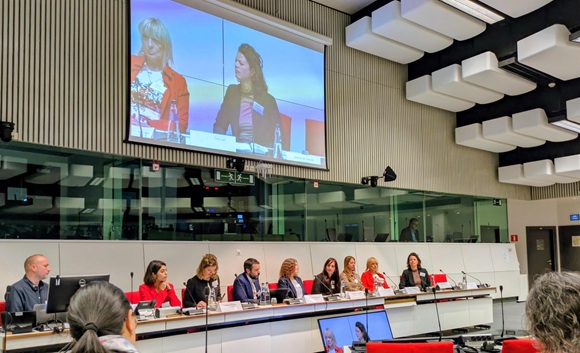
The 2026 edition of European Public Health Week (EUPHW), took place from 4-8 May 2026 under the overarching theme “Investing for sustainable health and well-being”. Bringing together policymakers, researchers, public health professionals, students and communities from across Europe, this year’s edition focused on the importance of long-term and equitable investments in public health systems, resilient communities and democratic trust. Through hundreds of events, discussions, and local initiatives, EUPHW 2026 promoted collaboration and knowledge exchange. The week once again reinforced the role of public health as a driver of social resilience, innovation and well-being across Europe.
The daily themes were developed collaboratively with input from the EUPHA Sections, and key partners, including WHO Regional Office for Europe, the European Observatory on Health Systems and Policies, Mental Health Europe, EuroHealthNet and DG Sante. If you would like to have another look at the daily themes, you can find them here:
Each day featured a kick-off webinar and flagship events, where policymakers, researchers, and public health professionals come together to address Europe’s most pressing health challenges, focusing on the key theme of the day, offering high-level discussions, practical insights, and opportunities for collaboration across sectors. You can still find these events here.
Throughout the week 349 events were registered from over 27 countries – Ukraine, Bulgaria and the Netherlands having organised the most events. If you would like to share any insights, summaries or photos from an event that you organised, we would be happy to receive those and display it in the final report and on the summary page of our website, that we are currently still building.
We would like to thank everyone that helped make this edition of EUPHW another very successful one and look forward to working together again next year!
Capacity building opportunity: New programme for strengthening public health workforce capacity for mental health promotion and prevention
EUPHA, in collaboration with WHO/Europe is organizing a capacity‑building programme to strengthen public health workforce capacity for mental health promotion and prevention. You can apply for the programme until 5 June 2026.
What to expect:
The programme is designed for:
Curriculum and accreditation
The curriculum is aligned with the WHO–ASPHER Competency Framework for the Public Health Workforce (2020) and the ASPHER Core Curriculum Programme for Public Health (2024).
The programme will be covering the following topics:
Successful participants will be awarded 7.5 APHEA credits for completion of the webinar series, with with an additional 5 credits for participation in the synthesis conference. To receive the EUPHAcademy Certificate, participants must attend all webinars (live or recorded), complete pre‑ and post‑assessments, and submit a completed workbook. Conference participation is optional and provides additional credits.
The first accredited cohort will target 120 professionals. Selection will aim to ensure balanced representation, professional relevance and meaningful inclusion of people with lived and living experience.
For more information: EUPHA – Apply to the EUPHA and WHO/Europe public health workforce capacity‑building programme for mental health promotion and prevention
Apply here until 5 June 2026!
In memoriam: Professor Brigit Toebes (1969–2026)
The European public health community has lost a deeply respected scholar, advocate, and colleague with the passing of Professor Brigit Toebes on 8 May 2026, at the age of 57. Professor Toebes was Professor of Health Law in a Global Context at the University of Groningen and an internationally recognised expert on the right to health and global health law. Professor Toebes was a representative of the Aletta Jacobs School of Public Health on the EUPHA Governing Board.
Throughout her career, she worked tirelessly to advance health as a fundamental human right, combining academic excellence with a strong commitment to justice, equity, and prevention. Her pioneering work influenced international debates on public health, human rights, tobacco and alcohol regulation, access to medicines, and healthy living environments. She also advised international organisations, including the United Nations, and inspired generations of students, researchers, and public health professionals.
Colleagues across Europe and beyond remember her not only as a leading scholar, but also as a generous mentor, compassionate collaborator, and warm-hearted person.
Just weeks before her passing, Professor Toebes was appointed Officer of the Order of Oranje-Nassau in recognition of her exceptional contributions to public health and human rights.
EUPHA extends its sincere condolences to her family, friends, colleagues, and all those who had the privilege of working with her.
Peace, polycrisis, and public health at the 79th World Health Assembly
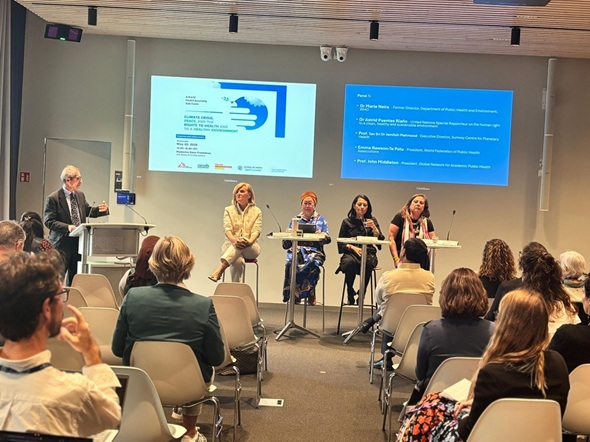
On 20 May, EUPHA in collaboration with Médecins Sans Frontières, the Global Network for Academic Public Health, the Global Climate and Health Alliance and other partners, organised a successful Side Event at the 79th World Health Assembly (WHA) in Geneva on Climate crisis, peace, and the right to health and healthy environment.
David Patterson and Farhang Tahzib, Presidents of the EUPHA Law and Public Health Section and EUPHA Ethics in Public Health Section respectively, who lead the organisation of this Side Event, also participated in and supported a number of other Side Events and activities at the WHA. This included a Side Events on the “Global Health and Peace Initiative, Advancing the Right to Health through the ICJ Advisory Opinion on Climate Change”, the “Pan European Commission on Climate and Health”, “Promoting Peace and Health: public health’s role”, as well as the launch of the Lancet Commission on Health, Conflict, and Forced Displacement: health in a world of crisis and impunity.
The occasion provided significant opportunity for learning and networking to take forward further activities to advance public health and ongoing work on peace, polycrisis.
Further information you can reach out to: [email protected] or [email protected]
Ageing is Living Leadership Course, Bilbao
What does it mean to build systems that let people age without fear? That was the thread running through the WHO/Europe Ageing is Living Leadership Course that took place 13-15 May in Bilbao. This course moved across the full arc of ageing, from prevention to end of life, and takes on the ageist and ableist narratives that slow progress as directly as it takes on policy design.
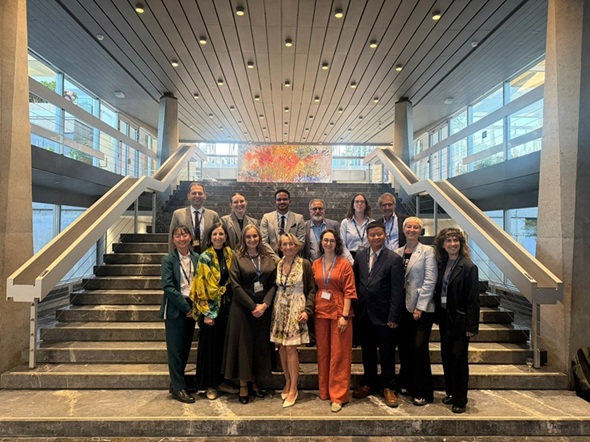
EUPHA’s Executive Director Charlott Marchandise was part of the faculty this year, contributing a session on systems thinking and negotiation through VITA CITY, EUPHAcademy’s urban health board game. Leaders operating at local, regional, national, and international levels, with their different vantage points and areas of influence turned the game into a genuine collective resource.
We look forward to participating again next year.
Thanks to WHO/Europe and the Diputación Foral de Bizkaia for organising this event, and to the course leads for the excellent quality of what they developed.
RIVER-EU Final Conference in Brussels
On 19–20 May 2026, the RIVER-EU project brought together community representatives, policymakers, researchers, civil society organisations, and public health professionals in Brussels to discuss how to reduce inequalities in vaccination uptake across Europe.
The events focused on practical, community-led approaches to improving access to MMR and HPV vaccination among underserved communities, and on how vaccine equity can be better embedded into long-term public health policy and practice.
The public conference, hosted in Brussels in partnership with the European Economic and Social Committee (EESC), showcased implementation experiences from across Europe and introduced the new RIVER-EU Guideline and Action Framework for policymakers and practitioners. The following day’s expert exchange explored how community-led approaches can become standard practice and how immunisation systems can remain resilient in the face of misinformation, political pressure, and growing inequities.
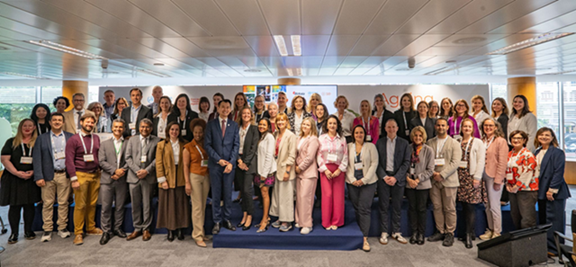
The final conference and the policy exchange in Brussels were organised by EuroHealthNet, bringing together a diverse and engaged group of stakeholders from across Europe. EUPHA was pleased to actively contribute to these discussions through the participation of Julian Hein and Charlotte Marchandise.
Wiktoria’s internship at EUPHA
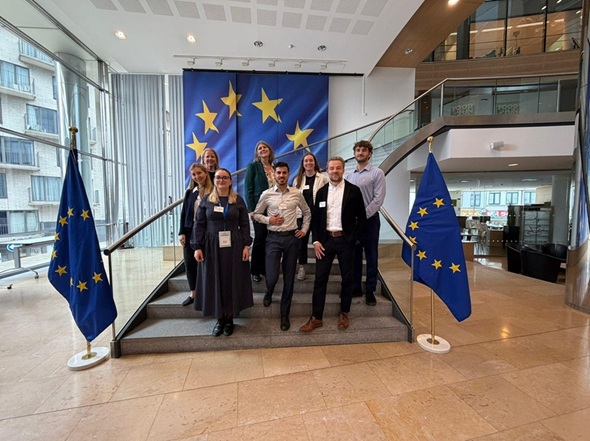
On 15 May Wiktoria Bika’s internship came to an end, after fruitful months that included publishing a report and speaking at an event during EUPHW at the European Parliament. We are confident that Wiktoria will forge a strong and successful path in international health policy, and we look forward to hearing about her future achievements.
Read her reflections on the internship here.
|
3. EUPHA events
Bridging the Gap in Multimorbidity: From Epidemiology to Real-World Settings
Date: 3 – 4 June
A two-day symposium featuring four sessions exploring patterns of multimorbidity, strategies for prevention and management, and perspectives from real-world settings.
The event is aimed at researchers, clinicians, public health professionals, and policymakers working within multimorbidity and chronic disease. Danish and international experts will present their work and engage participants in discussions.
On the second day, a dedicated session will showcase short presentations of current research. Participants are encouraged to submit abstracts for consideration.
Check out the events page and register here.
What would the Ottawa Charter look like if it were written in 2026?
Date: 8 June / 13:00 – 14:30 CEST
In celebration of the 40th anniversary of the Ottawa Charter, the EUPHA Health Promotion Section and EUPHAnxt invite students and early-career public health professionals to this online workshop to discuss “What would the Ottawa Charter look like if it were written in 2026?”
Participants will work in small groups, providing the opportunity to discuss with people from all over Europe and beyond.
Depending on the profile of participants, breakout rooms may actually be set to cater for participants more at ease working in French, Spanish, and other languages.
Check out the events page and register here.
Unesco Chair Global Community Health Annual Workshop
Date: 9 – 11 June
The sixth edition of the Global Community Health Annual Workshop will take place from Tuesday 9 till Thursday 11 June 2026.
The main theme of this year’s workshop is ‘Connecting planetary health, climate justice and community health: from knowledge to impact’.
The Global Community Health Annual Workshop provides a space where community health practitioners, activists, policy makers, and researchers can learn and improve their skills. In 2025 over 500 participants from all regions of the world participated.
The sixth edition of the Global Community Health Annual Workshop will take place online on Tuesday 9, Wednesday 10 and Thursday 11 June 2026.
Check out the events page and register here.
From diplomacy to action: implementing the 2025 political declaration on noncommunicable diseases, mental health and wellbeing
Date: 18 June / 16:00 – 17:00 CEST
Dr Nick Banatvala is the head of the Secretariat of the United Nations Inter-Agency Task Force on the Prevention and Control of Non-communicable Diseases. The Task Force was established by the United Nations Secretary-General in 2013 and reports to the United Nations Economic and Social Council. WHO provides the Secretariat.
Check out the events page and register here.
EUPHA-THSR Spring School on Translational Health Services Research Methods and mid-term conference
Date: 22 – 26 June
The second edition of the EUPHA-THSR Spring School on ‘Translational Health Services Research Methods 2026: Health, Care and Information Pathways for Strengthening Health and Care Systems’ is intended for PhD students, researchers and practitioners from public health institutes and academia working towards solving questions from practice. The focus will be on measuring, evaluating and designing pathways towards improving people-centred care.
The EUPHA-HSR Mid-term conference is open to our EUPHA-HSR Section members and will take place on Thursday 25 and Friday 26 of June, 2026. Participants from the Spring-School are expected to actively participate.
The Community Engagement and Dissemination is open to the general public & public health community and will be held on June 26th, in the afternoon.
Check out the events page and register here.
|
4. European Public Health Conference
Conference registration is open
Registration for the 19th European Public Health Conference, taking place 10-13 November 2026 in Bilbao has opened on 1 April. This year’s theme, “Urban and global synergies: shaping the future of public health with climate resilience, equity and innovation” will explore and debate the current research and policy challenges of population health.
Take advantage of early bird rates by registering before 10 July 2026. As in previous years, registration may close earlier than expected due to venue capacity, so we strongly encourage you to secure your place in time to avoid disappointment.
More information is available here.
Key Dates
Social programme
Alongside a rich scientific programme, join us in Bilbao for two memorable social events designed to connect, inspire and celebrate our public health community.
On 11 November, EPH Conference warmly welcomes all delegates to the Welcome Reception at the beautiful Azkuna Zentroa. This informal gathering offers the perfect opportunity to meet colleagues from across Europe and beyond in a relaxed and inspiring setting. The Welcome Reception is free of charge, but registration is required.
On 12 November, EPH Conference invites you to a truly special Social Evening at the iconic Guggenheim Museum Bilbao. For one exclusive evening, the museum will be opened for EPH Conference delegates only. Surrounded by world-renowned art and architecture, enjoy an unforgettable night of food, drinks and dancing in a unique cultural setting. The fee for this event is €70, and registration is required.
|
5. Upcoming courses and conferences
|
6. Editor’s Choice
Each month we ask European Journal of Public Health (EJPH) Editor-in-Chief, Tiago Correia, to select his top-picks of the latest EJPH issue.
This month’s Editor’s Choice highlights how public health must respond to a world increasingly shaped by overlapping crises: infectious disease threats, regional instability, conflict, misinformation and pressure on multilateral institutions. The selected pieces speak to different but connected dimensions of this challenge. They show why preparedness cannot be reduced to emergency response alone, but must include resilient institutions, trusted communication, cross-border cooperation, stronger surveillance and practical solidarity between countries and public health actors. In a context where outbreaks such as hantavirus remind us how quickly health threats can move across borders, and where ongoing conflicts continue to affect Europe and its neighbouring regions, these articles offer timely reflections on the infrastructures, partnerships and political commitments needed to protect public health.
|
|
Unsubscribe
If you would like unsubscribe from the EUPHA newsletter then please click here.
|