 |
The European Public Health Association Newsletter – June 2026 |
|
Newsletter – June 2026
|
1. Editorial
Extreme temperatures, exacerbated problems
Europe has just lived through its most severe heatwave on record, with national temperature records having been broken in many countries over a single weekend. More than 1,300 excess deaths have been recorded in Europe since 21 June, according to WHO, including children who died in locked cars and young people who drowned seeking relief in unsupervised swimming spots.
It is the second major heatwave to hit Europe in two months. WHO Director General warned that Europe is the fastest-warming continent on Earth, heating at twice the global average.
This heatwave exposed, once again, our structural vulnerability. Emergency rooms stretched thin, and once again the most vulnerable among us, older people, outdoor workers, people without access to cooling, children, those with chronic illnesses, are bearing the heaviest cost. Ukraine faced a particular challenge, with grid operators in at least five regions announcing restrictions on energy use as the war-damaged power network struggled to cope with the heat.
What strikes us is how predictable the pattern has become, and how unequally prepared we still are to meet it. Heat does not affect everyone equally. It exposes brutally and immediately the same inequities we talk about year-round: housing quality, urban design, access to care, social isolation. A heatwave is, in many ways, a stress test for everything our health and social systems are supposed to protect.
This is exactly why the theme of our upcoming EPH Conference in Bilbao “Urban and global synergies: shaping the future of public health with climate resilience, equity and innovation” has never felt more urgent, or more lived-in.
Bilbao is a scientific conference, but also a working session on what cities, health systems, and communities can actually do — now — to build resilience: cooling strategies that reach the people who need them most, urban planning that treats heat as a health determinant, early warning systems that translate into real protection on the ground, and policy that finally connects climate action with health equity rather than treating them as separate agendas.
Dr. Tit Albreht, EUPHA President
|
2. EUPHA news
EUPHA and UNICEF MoU
EUPHA and UNICEF Europe & Central Asia have signed a Memorandum of Understanding, establishing a two-year strategic partnership to advance child and adolescent health across Europe and Central Asia.
By bringing together EUPHA’s scientific and professional network with UNICEF’s expertise in advocacy, implementation, and child rights, this collaboration aims to promote equitable, preventive, and holistic approaches to health and wellbeing for children and young people.
Our joint work will focus on key public health priorities, including:
This partnership marks an important step in strengthening cooperation between the public health and child rights communities and contributes to achieving the Sustainable Development Goals through improved health equity and wellbeing.
We look forward to working together to build healthier, more resilient futures for children and young people.
Read the full article here.
Staff news: Welcoming our new colleague Piia
We are very happy to welcome Piia Rikkonen as our new Finance Officer at EUPHA!
Piia has numerous years of experience in finance and was dedicated particularly to NGOs and organisations with a larger societal impact in recent years.
We are excited to have her on the team and look forward to working together to achieve EUPHA’s vision of narrowing health inequalities and building healthier societies.
A tribute to Peter Allebeck, Editor-in-Chief of the European Journal of Public Health 2010-2026)
EUPHA would like to thank Peter Allebeck for his dedication and efforts in the Executive Council as Editor-in-Chief of the European Journal of Public Health.
In 2010, Peter became the fourth editor-in-chief of the European Journal of Public Health. Under his leadership, the journal has consolidated its position as a standard-bearer for rigorous, policy-relevant public health research, elevating debates on everything from social determinants to health system performance.
Read the EJPH editorial paying tribute to Peter’s leadership of the journal here.
EUPHA urges EU governments States to adopt tobacco endgame measures
In relation to “World No Tobacco Day” that took place on 31 May, EUPHA is calling on all EU Member States to move forward with ambitious tobacco endgame measures, including the creation of “smoke-free generations”, to accelerate the reduction of tobacco use across Europe. The call follows the publication of a new legal analysis showing that EU law supports, rather than prevents, evidence-based measures aimed at protecting public health.
The analysis challenges longstanding claims that tobacco endgame policies are incompatible with EU internal market rules, concluding that governments have considerable legal scope to adopt bold tobacco control measures. As tobacco remains a leading cause of preventable death in Europe, EUPHA argues that incremental approaches are no longer sufficient and urges policymakers to take decisive action. Read the full article to learn more.
Read the full statement here.
Letter on Ultra-Processed Foods
A coalition of 21 organisations, which EUPHA is a part of, representing civil society, health associations and medical professionals has called on the European Commission to take urgent action to create healthier food environments across Europe. While welcoming the Commission’s study on ultra-processed foods (UPFs) announced as part of the EU Safe Hearts Plan, the organisations stress that policymakers should act now on the well-established links between unhealthy diets and rising rates of obesity, cancer, diabetes and cardiovascular disease.
The coalition is urging stronger protections for children from unhealthy food marketing, healthier school food environments, mandatory front-of-pack nutrition labelling, and measures to improve access to affordable healthy foods, particularly for lower-income groups. They also emphasise that the upcoming UPFs study should be independent, science-led, transparent and focused on delivering practical policy solutions without delaying immediate action.
Read the letter here.
New EUPHA publication on corporate accountability in food systems
As part of the FOOD-ACCOUNT project on corporate accountability in food systems EUPHA has developed an evidence review, titled “Who’s Watching the Food Giants?
A structured integrative review of statutory food policy instruments across the WHO European Region and Latin America”.
The review brings together international evidence on policy measures that can influence how food companies formulate, market and provide food products, highlighting approaches that have demonstrated potential to improve population health and support healthier, more sustainable diets.
The findings will help inform the project’s ongoing work to identify, prioritise and advance effective corporate accountability measures at European level. By strengthening the evidence base for policy action, the review contributes to broader efforts to create food environments in which healthier and more sustainable choices become the easier choice for everyone.
Read the report here.
More information on the project is available here.
Journal Impact Factors 2025
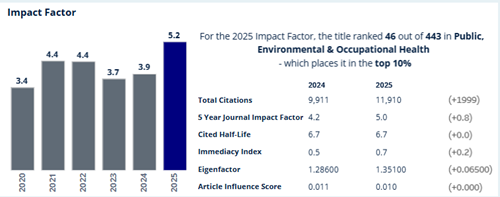
The 2025 journal impact factors have been released, awarding the European Journal of Public Health (EJPH) with an impact factor of 5.2.
This achievement reflects the hard work and dedication that goes into the journal, it’s scientific relevance, rigour and quality, and the impact it has, specifically in public, environmental and occupational health. Thank you to all the editors, reviewers, authors and anyone that has contributed to the journal’s success.
Public Health Expert Group Meeting on Health Information Integrity
Fostering Trust, Knowledge and Informed Decision Making
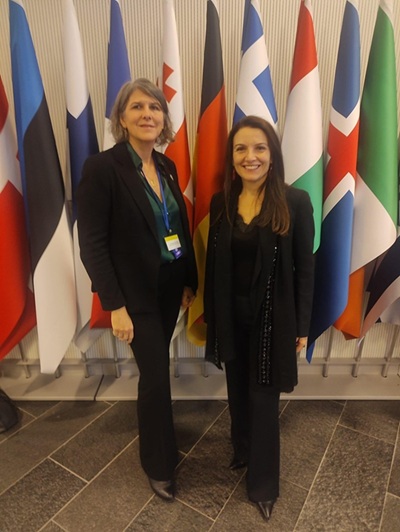
EUPHA Director Charlotte Marchandise joined more than 50 representatives from national authorities on 8 June for a public health expert group meeting focused on strengthening trust in science and tackling health-related misinformation and disinformation. Co-organised by the European Commission, the European Medicines Agency (EMA) and the European Centre for Disease Prevention and Control (ECDC), the meeting highlighted the need for closer cooperation across the health communication community under the EU Global Health Resilience Initiative.
Participants agreed that trust cannot be built by any single organisation alone. Key messages included the importance of listening, dialogue and community engagement, the value of fact-checking data in guiding communication efforts, and the need to invest in preventive measures such as prebunking alongside rapid responses to false information. Discussions also underscored the role of digital platforms in shaping information environments and the importance of coordination to avoid duplication, share good practices, amplify what already exists, and maximise impact.
The agenda, flash report and slide deck presentation are available here.
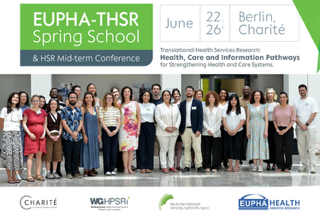
EUPHA-THSR Spring School & HSR Mid-term Conference
Translational Health Services Research: Health, Care and Information Pathways for Strengthening Health and Care Systems.
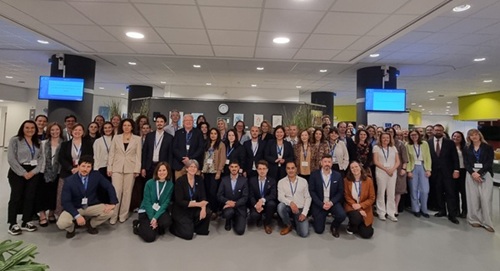
From June 22-26th 2026, health services researchers gathered at the THSR Spring School hosted at Charité, Berlin to learn, reflect and share perspectives on strengthening health care systems. Coming from Europe and the world, 35 participants shared insights from their area of research and work through case studies and inspired each other to look at their quest and questions on health, care and information pathways from different angles. The programme also included the EUPHA-HSR Mid-Term Conference, bringing together faculty, alumni of the 2024 THSR Spring School first edition and the wider EUPHA-HSR community. It concluded with a community engagement day focused on translating research into policy and practice, in dialogue with Berlin-based researchers.
The European Faculty lead by Lorena Dini, President of the EUPHA-HSR Section, with contributions from Filippo Quattrone, Zoi Tsimtsiou, Rosita Koleva-Kolarova, Silvia Evers and Elena Petelos, guided the process and provided insights into health systems research through a larger intercultural frame.
A larger framework to understand health systems research through methodology and case studies helped participants to better understand how research evidence can support improvements in healthcare practice and policy.
|

3. European Public Health Conference
Results on abstract and workshop submissions
On 12 June, results on the abstract and workshop submissions for the EPH Conference 2026 were sent out to all submitters.
This year, we received a record 3,508 abstract submissions and 384 workshop proposals — the highest number in the Conference’s history. These figures reflect the continued strength, diversity and engagement of the European public health community.
To ensure a rigorous and fair review process, all submissions were independently assessed by members of the International Scientific Committee (ISC), selected based on their subject-matter expertise. In total, 198 ISC members participated in the review process, scoring submissions on a scale from 1 to 7.
On average, each single abstract was reviewed by 4.56 experts, while workshop proposals received an average of 4.96 reviews. Workshop proposals with an average score of 5.20 or higher were accepted into the programme.
Single abstracts were allocated to different presentation formats based on their review scores, score consistency, and the presentation preferences indicated by the authors:
Authors will be able to review and update presenter and author information through their submission account until 15 July 2026.
Please note that submissions cannot be accessed through your EUPHA account. To review or amend your submission, you will need to log in to the separate abstract submission system using the link provided in your notification email.
A sincere thank you to all authors, reviewers and members of the International Scientific Committee for their valuable contributions. The scientific programme is built on your research, expertise and commitment to advancing public health across Europe and beyond.
More detailed information about the abstract decision process can be found here.
Last chance to apply for Jouke van der Zee Fund
For many years, EUPHA and the EPH Conference Foundation have supported participation from public health professionals in low- and middle-income European countries. In 2020, these efforts were brought together through the Jouke van der Zee Fund. Named in honour of Prof. Dr. Jouke van der Zee (1947–2025), one of the founding members of EUPHA and the initiator of the first EUPHA Conference, the Fund continues his legacy by supporting participation in the annual European Public Health Conference. The Fund offers a limited number of registration fee waivers for the 19th European Public Health Conference in Bilbao, Spain. The waiver covers the main conference registration fee and the Welcome Reception. You may apply if you:
Please note that travel, accommodation, pre-conferences and social events other than the Welcome Reception are not covered. Applications are open until 1 July 2026. Applications received outside this period will not be considered. Selection will take into account abstract scores, geographical balance, institutional representation and previous support received from the Fund. For eligibility criteria and application instructions, visit the website.
Ten days left for early-bird registration
Take advantage of early bird rates by registering before 10 July 2026.
All fees include VAT.
As in previous years, registration may close earlier than expected due to venue capacity, so we strongly encourage you to secure your place in time to avoid disappointment.
More information, including registration fees, is available here.
Key Dates
Register for pre-conferences
The pre-conference programme for the 19th European Public Health Conference in Bilbao is now live, and registration is officially open. Taking place on Tuesday 10 November 2026, the programme offers a wide range of half-day and full-day sessions covering some of the most pressing and innovative topics in public health today.
This year’s line-up includes pre-conferences on behavioural and social sciences, AI and digital public health, climate resilience, cancer prevention, migrant and minority health, palliative care, suicide prevention, urban health, commercial determinants of health, and many more. Sessions are organised by leading European and international public health organisations, institutions and research networks.
Delegates can add a pre-conference to their registration during the conference registration process. Places are limited and early registration is recommended.
|
4. Upcoming courses and conferences
|
5. Editor’s Choice
Each month we ask European Journal of Public Health (EJPH) Editor-in-Chief, Tiago Correia, to select his top-picks of the latest EJPH issue.
This month’s Editor’s Choice brings together three timely contributions on global public health in an era of defunding, geopolitical disruption and institutional uncertainty. The selected pieces ask what happens when long-standing assumptions about development assistance, international cooperation and US leadership can no longer be taken for granted. Together, they show that cuts to global health and equity are not only moral or humanitarian concerns, but also strategic, economic and governance failures. For Europe, the challenge is clear: it cannot simply lament the weakening of the old order. It must help shape a more resilient, equitable and credible global health architecture.
|
|
Unsubscribe
If you would like unsubscribe from the EUPHA newsletter then please click here.
|