 |
The European Public Health Association Newsletter – February 2026 |
|
Newsletter – February 2026
|
1. Editorial
EUPHAcademy: building a shared learning ecosystem for public health in Europe
Public health in Europe is evolving in a context of increasing complexity. Pandemics, climate change, social fragmentation, misinformation, and workforce pressures are reshaping the environment in which we work. Meeting these challenges requires more than individual expertise. It requires a competent, connected, and continuously learning public health workforce, able to translate evidence into equitable, real-world impact.
Over the years, EUPHA has invested significantly in capacity-building through its Sections, the European Public Health Conference, EUPHAnxt, and a wide range of collaborative initiatives. Under EUPHA’s 2025–2030 strategy, we are now taking the next step: bringing these efforts together into a coherent and strategic vision that strengthens the public health workforce across Europe.
EUPHAcademy is the result of this ambition. It is conceived as a shared learning ecosystem that connects and aligns EUPHA’s capacity-building activities within a quality-assured framework. Its purpose is to support public health professionals, policymakers, and community actors in developing the competencies needed for today’s and tomorrow’s challenges.
This initiative builds on important work already advanced at European level, including the WHO–ASPHER Roadmap for Professionalising the Public Health Workforce, the Essential Public Health Functions, and ECDC competency frameworks. EUPHAcademy does not duplicate or compete with existing academies or training institutes. Instead, it plays a coordinating role — strengthening coherence, visibility, and collaboration across existing initiatives.
Developed in partnership with ASPHER and other key actors, EUPHAcademy aims to reflect the diversity of Europe’s public health workforce through shared governance and collaboration.
In 2026, EUPHAcademy will enter a pilot phase, testing learning pathways, partnerships, and formats that can evolve over time. By creating greater coherence across our capacity-building efforts, we aim to strengthen competencies, recognition, and collaboration across the European public health community.
Our shared goal is clear: a stronger, more visible, and more resilient public health workforce, equipped not only to generate evidence, but to translate it into meaningful impact for policy and practice.
Dr. Tit Albreht, EUPHA President
|
2. EUPHA news
EUPHA is hiring!
Are you an experienced senior finance professional and ready to make a real impact on public health in Europe? Following the upcoming retirement of the current CFO, we are seeking candidates for the position of Chief Financial Officer
Location: Utrecht (hybrid)
Your role
Deadline for applications is 15 March.
Do you have a solid financial background and the motivation to support our international organisation focused on improving public health in Europe? We are recruiting an experienced Finance Officer.
Location: Utrecht (hybrid)
Your role
Deadline for applications is 15 March.
Upcoming EUPHA Section webinars
Our Sections continue to bring together experts from across Europe and beyond to explore today’s most pressing public health challenges. Join us to stay informed, share knowledge, and connect with the latest research and policy developments.
26 March 2026, 16:00 – 17:00 CET
Organizer: Chronic Diseases Section
In this webinar, experts highlight that mental illness affects more than 13% of the global population and remains underdiagnosed, despite its chronic nature, major contribution to nonfatal disease burden, and an estimated 20-year reduction in life expectancy. The session presents evidence linking a range of mental health conditions—not only depression—to increased risk of type 2 diabetes, calling for broader research, improved diagnosis, reduced stigma, and integrated prevention strategies that address both psychological and metabolic risk.
30 April 2026, 16:00 – 17:00 CET
Organizer: Chronic Diseases Section
This webinar will explore a cross-sectional study which evaluated medical students’ knowledge, attitudes, and preventive behaviors regarding skin cancer in the context of climate change. Findings demonstrate gaps in climate-informed dermatology education and highlight the need for preventive curriculum integration. The study offers a template for expanding public health-oriented medical education in settings facing rising UV exposure and heat-related skin disease risk.
From crisis to capacities: new webinar series on the health and care workforce
Strengthening the health and care workforce remains one of the most urgent priorities for public health systems across Europe. Workforce shortages, burnout, migration, and skills gaps continue to challenge health systems’ resilience and equity.
A new webinar series, The Health and Care Workforce: From Crisis to Capacities, brings these issues to the forefront. The series is organised by the WHO Collaborating Centre on Health Workforce Policy and Planning (IHMT/NOVA University Lisbon) in collaboration with the European Observatory on Health Systems and Policies, WHO/Europe, EUPHA, the EUPHA Health and Care Workforce Section, the WHO Collaborating Centre on Public Health Leadership, and Health Policy.
The series will explore how countries can move beyond crisis management towards long-term capacity-building, with a focus on policy innovation, workforce planning, leadership, and system reform. It offers a platform for dialogue between researchers, policymakers, and practitioners working to secure a sustainable and well-supported workforce for the future.
The full programme and registration details are now available online. Participants can register for free through the dedicated webpage and download the programme in PDF format.
If you work on workforce policy, planning, education, or leadership, this series offers an opportunity to engage with current evidence and practical solutions.
RIVER-EU Final Event | 19 May 2026 | Brussels
After five years of collaboration across Europe, the RIVER-EU project will conclude with a final public event in Brussels on 19 May 2026. The event will bring together communities, practitioners, researchers, and policymakers to reflect on the project’s achievements and explore how its results can strengthen equitable vaccination systems across Europe.
The programme will present the project’s main outputs, highlight community perspectives, and formally introduce the RIVER-EU Guideline and Action Framework. Further details, including the draft agenda and registration link, will be shared soon.
About the RIVER-EU project
Health system barriers to vaccine uptake continue to disproportionately affect specific ethnic, religious, and cultural minorities across Europe. These structural barriers contribute to lower vaccination rates and deepen existing health inequalities.
RIVER-EU has focused on identifying and addressing these barriers, with particular attention to MMR (measles, mumps, rubella) and HPV (human papillomavirus) vaccination. The project has worked closely with underserved communities, including:
The project began by analysing health system barriers and enablers to vaccination within these communities. Based on these findings, partners adapted existing interventions or developed new ones, which were then implemented and evaluated in close collaboration with communities and local stakeholders.
The results of this work have informed evidence-based guidance and contributed to the development of an educational platform for healthcare professionals, supporting more inclusive and responsive vaccination systems across Europe.
We encourage our public health community working on immunisation, equity, and community engagement to follow the upcoming updates and consider participating in the final event.
EUPHA contributes public health perspective to EESC hearing on proposed European Centre of Clinical Excellence for Pharmaceuticals
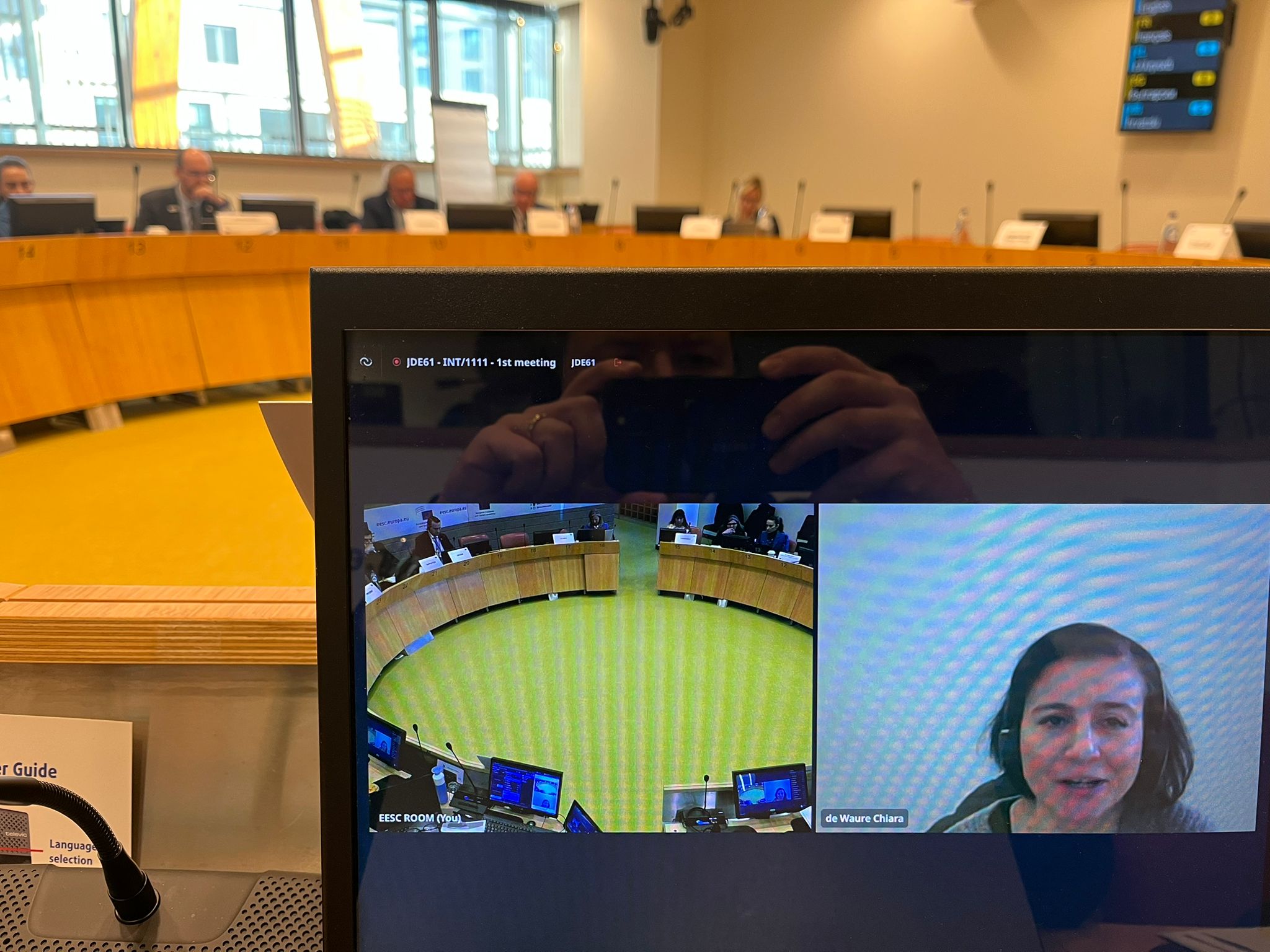
EUPHA recently contributed to an expert hearing at the European Economic and Social Committee (EESC), which is currently drafting an opinion on the proposed European Centre of Clinical Excellence for Pharmaceuticals. The initiative originates from the Cypriot Presidency of the Council of the EU and aims to explore how EU-level expertise could further support Member States in the area of pharmaceuticals.
EUPHA was represented by Prof. Chiara de Waure, who brought a clear public health perspective to the discussion. Other speakers at the hearing included representatives from the European Commission (DG SANTE), the European Medicines Agency (EMA), the European Association of Hospital Pharmacists (EAHP) and the Standing Committee of European Doctors (CPME).
In her intervention, Prof. de Waure underlined the importance of assessing pharmaceuticals not only from a clinical and regulatory standpoint, but also through a broader public health lens. This includes considering population-level benefits and harms, equity in access, resource implications for health systems, and wider societal impact. She emphasised that any future European Centre should work in complementarity with the EU Health Technology Assessment framework and existing structures, avoiding duplication while strengthening coherence across Member States.
The discussion highlighted the ongoing challenge of unequal access to medicines across Europe and the potential added value of coordinated EU-level guidance and expertise. Ensuring that decisions around pharmaceuticals are informed by public health principles remains essential to promoting equity, sustainability, and improved health outcomes for all.
EUPHA will continue to engage in EU-level policy discussions to ensure that the public health perspective is visible, evidence-informed, and firmly embedded in future initiatives.
EUPHA calls for stronger public health integration in Europe’s climate resilience agenda
EUPHA, under the leadership of its Environment & Health Section, has contributed to the European Commission’s consultation on climate resilience, emphasising that climate change is an escalating public health threat affecting all communities across Europe. Rising temperatures, extreme weather, air pollution, water scarcity, and climate-sensitive diseases are already placing pressure on health systems and disproportionately affecting vulnerable populations. In its response, EUPHA calls for climate resilience to be embedded “by design” across all sectors, legislation and infrastructure, with particular attention to health systems.
Key recommendations include establishing EU-wide climate risk frameworks, strengthening adaptation planning and governance, improving risk assessments and monitoring, and ensuring better protection of vulnerable groups. EUPHA also highlights the need for stronger local capacity, harmonised data tools, and clear performance indicators.
EUPHA further stresses the importance of investing in resilient health infrastructure, disease surveillance and early warning systems, alongside innovation and financing mechanisms that integrate climate risk into fiscal planning. Placing public health at the centre of climate policy is essential to building a healthier, more equitable and climate-resilient Europe.
Cities@Heart launched in Basel to strengthen urban cardiovascular health
Last month, partners from across Europe met in Basel to officially launch Cities@Heart, a new pan-European public–private partnership under the Innovative Health Initiative (IHI). The project aims to tackle cardiovascular disease (CVD) and reduce health inequalities in urban settings through whole-city approaches.
Cities@Heart brings together cities, public health organisations, clinicians, researchers, industry partners, and communities. Working across seven European cities, the consortium will design, pilot, and evaluate integrated strategies addressing four major and preventable drivers of CVD: obesity, hypertension, dyslipidaemia, and diabetes. A core principle of the project is co-creation, ensuring solutions are developed with citizens and community leaders, not only for them.
Cardiovascular disease remains the leading cause of death in Europe, with a disproportionate impact on underserved urban populations. Cities@Heart seeks to embed prevention, early detection, and management within urban systems, supported by digital health tools, policy innovation, and economic evaluation. The shared ambition is to reduce avoidable CVD mortality and narrow persistent health gaps across European cities.
EUPHA contributes to the project through communication, dissemination, events, and policy engagement. By amplifying evidence and implementation lessons, we support the translation of project findings into public health practice and policy across Europe.
More information about the project is available here.
|
3. European Public Health Conference
Abstract submissions for EPH Conference 2026 are now open
Abstract submissions are now open for the 19th EPH Conference 2026 in Bilbao, Spain. We invite researchers, policymakers, practitioners, and students to share their work and contribute to Europe’s leading public health dialogue. The conference provides a platform to present research findings, innovative practices, and policy insights addressing the most pressing public health challenges facing Europe today.
The deadline for submission is 1 May 2026 at 18:00 CET. Late submissions cannot be accepted, so we strongly encourage authors to prepare their abstracts well in advance of the deadline.
Before starting the submission process, applicants are advised to carefully read the abstract submission guidelines in full. Guidelines are available for both single abstract submissions and workshop abstract submissions. It is essential to review the relevant document before drafting and uploading your abstract. Adherence to the prescribed structure, word limits, and formatting requirements is mandatory. Abstracts that do not comply with the submission criteria will not be considered for review.
For 2026, a streamlined submission portal has been introduced to make the process more efficient and user-friendly. Authors can upload their abstract, access their submission at any time, and make edits up until the final deadline. This flexibility allows you to refine your abstract and ensure it is clear, concise, and ready for review.
To submit your abstract, please visit our website.
We look forward to receiving your contributions and to welcoming a diverse and high-quality scientific programme in 2026.
EUPHAnxt Abstract Tutoring Programme now open for EPH 2026
Early-career researchers and first-time submitters to the 19th EPH Conference in Bilbao can benefit from the EUPHAnxt Abstract Tutoring Programme.
The programme offers one-time, anonymous feedback from experienced reviewers on the writing quality and structure of draft abstracts before official submission. It is designed to support authors who may not have access to local mentoring and want to strengthen their abstract ahead of the deadline.
Tutors provide feedback on clarity, structure, and alignment with the submission guidelines. They do not review methods or results, and no language editing is provided.
The tutoring window runs from now until 10 April 2026. Authors may submit one draft abstract and will receive feedback within two weeks. We strongly advise authors to wait for tutoring feedback before submitting through the official abstract portal. The final deadline for abstract submission to the 19th EPH Conference is 1 May 2026, 18:00 CET.
Read more about the Abstract Tutoring Programme on the EPH Conference website and make the most of this opportunity to strengthen your submission.
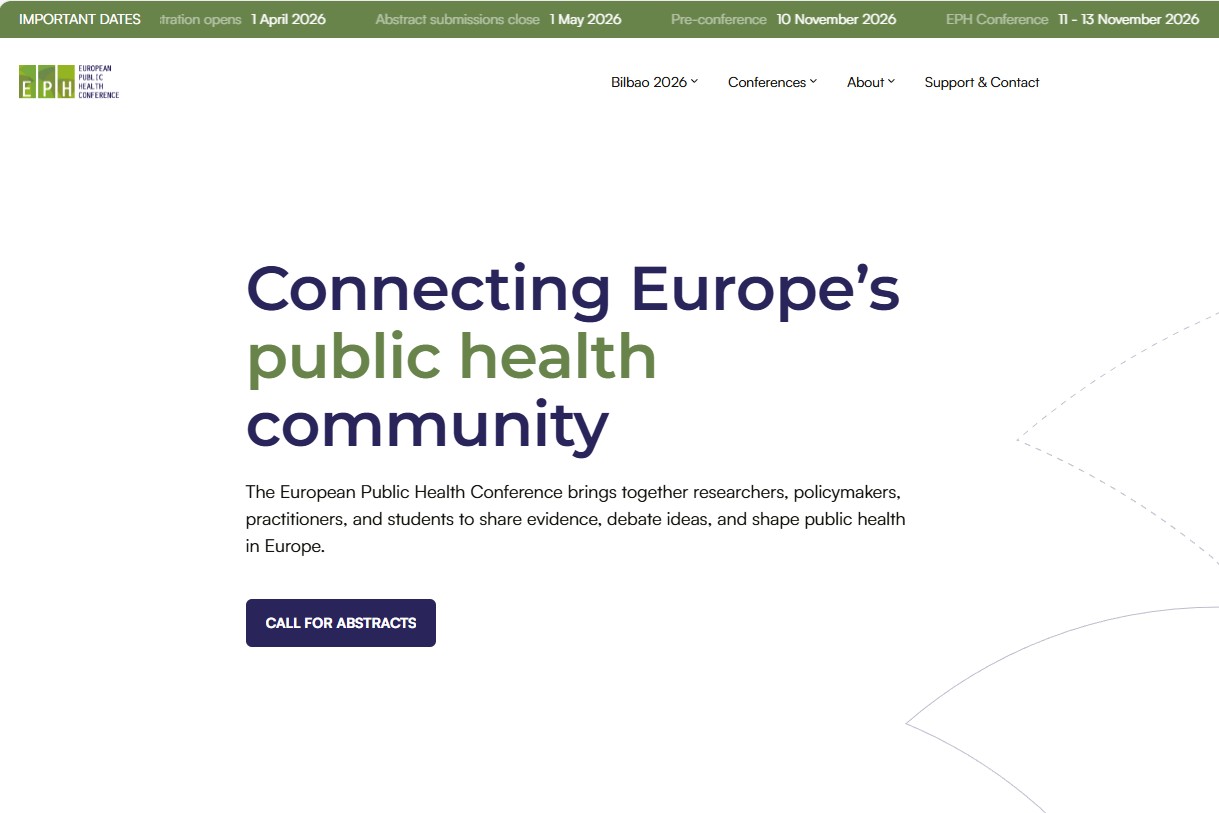
A new website for the EPH Conference
We’re pleased to launch the new website for the EPH Conference.
The updated site is designed to make it easier for you to find what you need—whether you’re preparing an abstract, planning your attendance, or following key conference milestones. With a clearer structure, improved navigation, and a more consistent look and feel, the website will support you throughout the full conference cycle.
Over the coming months, the site will be updated regularly with information on abstracts, the programme, registration, and practical details. Each section now has its own dedicated space, helping you get to the right information faster.
This launch marks the first step in a broader refresh of our digital presence. We’ll continue to improve the site as new content becomes available and as we move closer to the conference.
We invite you to explore the new website—and to check back often as we build toward the next EPH Conference for 2026.
|
4. Upcoming courses and conferences
|
5. Interesting publications
Universal duties in a fragmented world: why Europe must reclaim Kantian ethics for global health governance
Long-standing norms that have safeguarded global health are being discarded, threatening the foundations of cooperation and equity on which health security depends. Health facilities, health workers, and humanitarian corridors are being attacked deliberately in many conflict settings. Mechanisms intended to safeguard collective health, from guarantees of humanitarian access to pandemic preparedness frameworks, are being eroded by unilateral actions, such as the US withdrawal from global bodies, and a disregard for international law. The consequences are not abstract: they include delayed outbreak detection, denial of access to vaccines and essential medicines, and the normalisation of assaults on the protections on which global health depends. These developments raise a fundamental question for the global health community: can collective health be protected when political action no longer accepts universal obligations?
Public Health Quality Indicators as a prioritization and leadership tool: a scoping review of their role in health system transformation
Public health indicators serve as vital monitoring tools of population’s health while assisting policy makers in their leadership role while guiding policy decisions. Standardized indicator development continues to face substantial obstacles regarding their conceptual definition, methodological precision, and national compatibility. The aim of this review was to combine academic and institutional literature to assess the application of quality indicators in public health settings.
The health and care workforce: how to respond to multiple crises and new health priorities?
This special issue of Health Policy moves the health and care workforce debate from crisis towards the capacities needed for sustainability and resilience. Twenty-two articles bring together a wide spectrum of interconnected capacities and novel strategic actions essential for strengthening workforce development. Together they underscore the need for multi-level, intersectoral governance that aligns system, sector, organisational, and professional transformation efforts, as well as a process-oriented approach – from planning and preparing the health and care workforce for new health priorities to ensuring retention and enabling transformation. The special issue contributes new data and evidence and provides practical direction for health systems, policymakers, and other leaders to close existing data gaps, advance research, and leverage the workforce’s transformative capacities to effectively build a sustainable and resilient health and care workforce for the future.
Read the special issue in full.
|
|
Unsubscribe
If you would like unsubscribe from the EUPHA newsletter then please click here.
|