Key points
-
Voluntary pledges leave gaps, because many companies are not covered under it, the enforcement is lacking, and monitoring of success is insufficient.
-
Design decides whether a rule works. Two countries with binding rules saw opposite results.
-
Public health, environment and consumer advocacy organisations can only win to achieve stronger EU measures together.
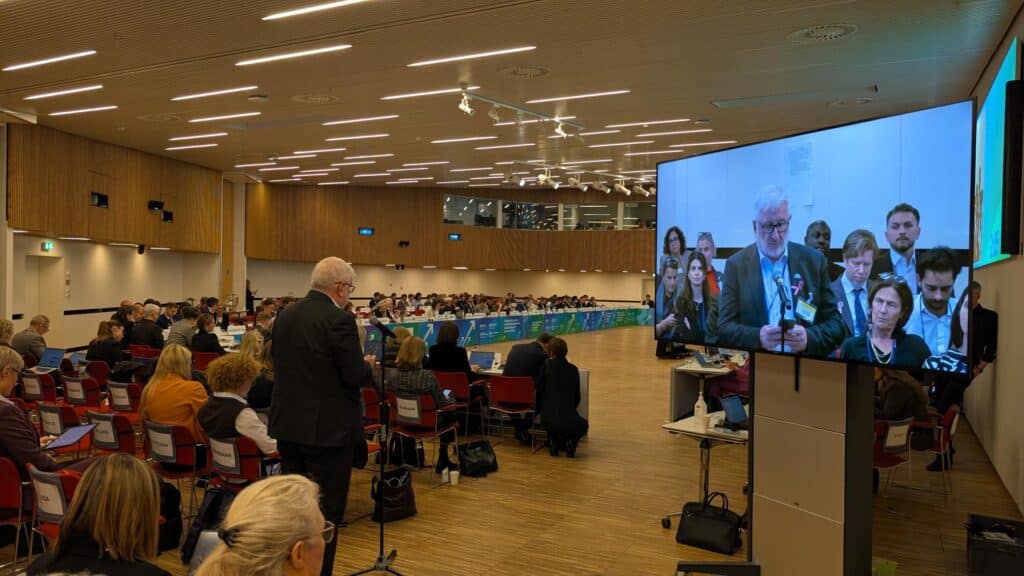
How can Europe hold food companies accountable for their impact on health, sustainability and equity? A FOOD-ACCOUNT session at the European Public Health Conference in Bilbao brought together evidence and civil society perspectives to explore what effective rules should look like and how to secure them.
The session focused on two central arguments: voluntary industry pledges are insufficient, and achieving stronger EU measures requires health, environmental and consumer organizations to work together. Protecting children from unhealthy food marketing provided a practical example throughout the presentations and audience discussion.
For EUPHA, a partner in FOOD-ACCOUNT (Food Systems Accountability for Health and Sustainability in Europe), the session was an opportunity to share project findings and involve the wider public health community in shaping advocacy priorities.
Effective rules need accountability built in
EUPHA presented a review of binding food policies in Europe and Latin America, examining what makes regulation effective. Rather than comparing voluntary and mandatory approaches, the review explored differences in the design of mandatory measures, including marketing restrictions and taxes.
Its central message was that choosing a policy area is only the beginning. Effective regulation must establish who is accountable, to whom, for what, and with what consequences.
Examples presented during the session illustrated how comprehensive marketing restrictions and taxes linked to sugar content can influence company behaviour. In Chile, television advertising for products with a “high in” warning fell by 64 percent. In Portugal, gaps around children’s television left room for companies to shift their advertising, and weekly unhealthy food advertising rose by 25 percent in those channels.
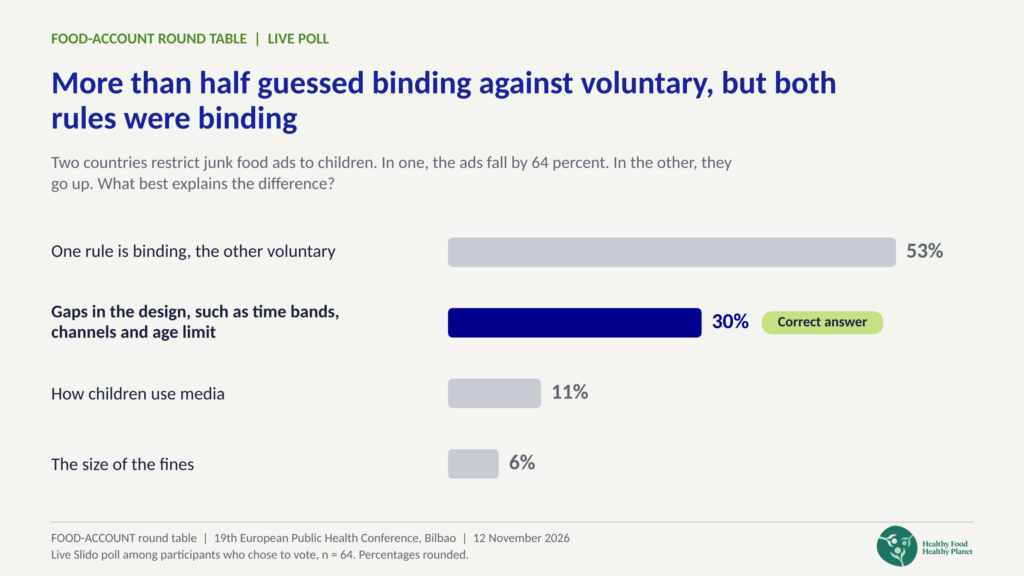
We put this question to the room as well. Among 64 participants who voted, 53 percent said one rule was binding and the other voluntary. However, both were binding. The difference lay in design, in gaps such as time bands, channels and age limit.
Enforcing, monitoring and updating policies are therefore essential to maintaining their effectiveness. The review also highlighted limited consideration of climate outcomes in the policies examined, pointing to the need to integrate health and environmental objectives more consistently.
Examining the limits of voluntary action
Evidence presented on behalf of SAFE highlighted weaknesses in voluntary approaches to protecting children from unhealthy food marketing. High compliance reported by participating companies can obscure wider gaps: companies outside an initiative are not covered, and voluntary commitments lack the legal enforcement needed to hold industry accountable.
The European Public Health Alliance presented its analysis of commitments under the EU Code of Conduct on Responsible Food Business and Marketing Practices. This examined what food manufacturers and brand owners had promised to do to support healthier, more balanced and sustainable diets, and how they reported progress.
The analysis identified gaps in ambition and measurability. Some commitments lacked clear baselines, targets or deadlines, while incomplete reporting and changing indicators made progress difficult to track. Commitments on marketing to children often reflected promises already made through other industry initiatives.
The findings reinforced the argument that voluntary commitments should not replace effective public policy.
Agreeing on shared priorities
Fern connected the discussion to the environmental impacts of food systems, drawing parallels between accountability challenges in nutrition and efforts to address deforestation. Its presentation emphasized the limitations of allowing companies to set their own ambitions, monitor their own progress and face few consequences when commitments fall short.
Project partners also outlined how they had assessed more than 40 potential policy measures before shortlisting 18 for discussion with civil society organizations. The process considered feasibility, potential impact, equity and opportunities for joint advocacy.
Binding restrictions on unhealthy food marketing to children emerged as a shared priority. This reflected both the importance of protecting children and opportunities to influence EU policymaking. Increasing plant-based options in public food provision also emerged as an area for advocacy.
Connecting research, law and advocacy
Audience polling and discussion explored potential routes for strengthening protection from unhealthy food marketing, including audiovisual media rules and digital and child protection initiatives.
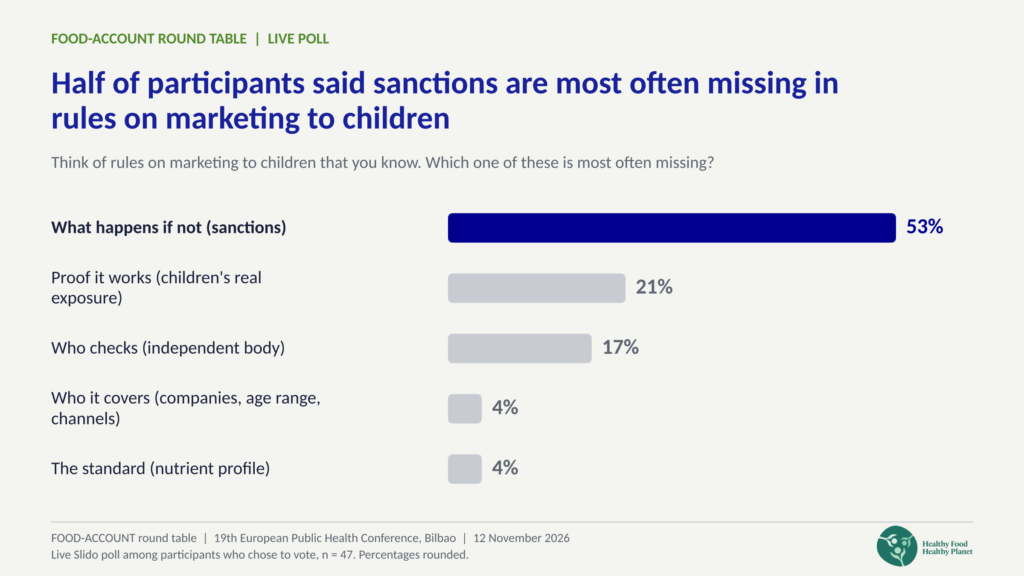
Audience polling explored what effective rules need and which EU routes could deliver them. Asked which element is most often missing in rules on marketing to children, 53 percent of participants chose sanctions, ahead of proof that rules work (21 percent) and independent checking (17 percent).
Asked which EU route is most likely to protect children within three years, one third chose the EU KIDS Act, one in five the revision of the audiovisual media directive, and more than a third said they did not know. The Commission proposed the KIDS Act in September; the audiovisual media directive is under review, and the Digital Fairness Act is at the legislative proposal stage.
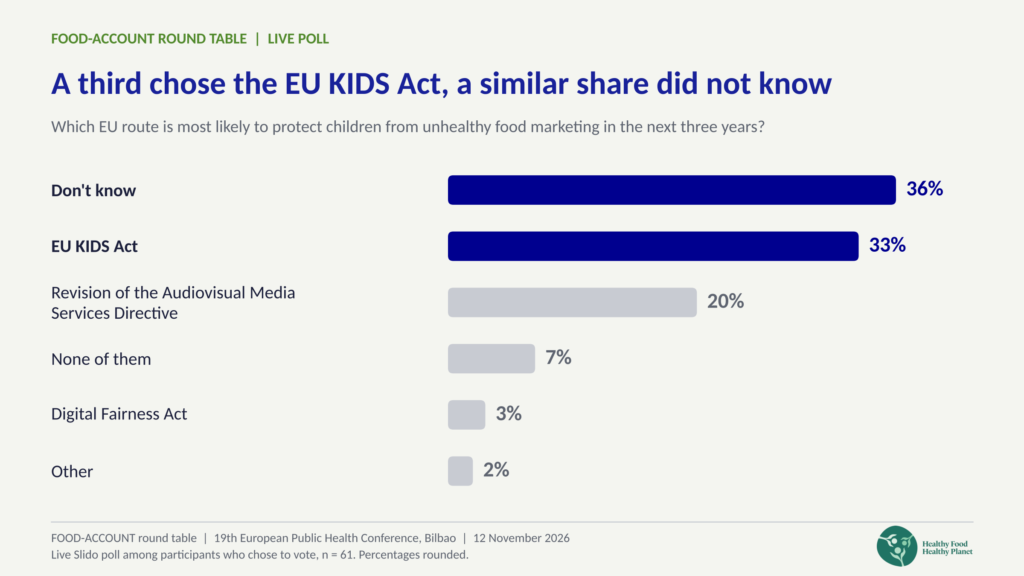
That more than a third of the audience did not know, also raised a broader question: how well does public health research connect with the policy processes that could put its findings into practice?
Participants called for closer collaboration between researchers, legal experts and civil society. Evidence can demonstrate harm and assess interventions; legal expertise can identify routes for action; and advocacy can help build the support needed to secure change.
With civil society organizations facing pressure on funding and capacity, speakers emphasized the value of agreeing on priorities and working together. For FOOD-ACCOUNT, the next step is to turn that shared direction into coordinated advocacy for binding measures that protect health, advance sustainability and make food industry accountability enforceable.
Join the call to action
Many participants said they would consider joining the call to action for binding EU rules on marketing unhealthy food to children. Are you in as well? Read the letter and contact the EU Food Policy Coalition to join. The call to action is open to researchers, institutes, and professional bodies as well as civil society organisations.